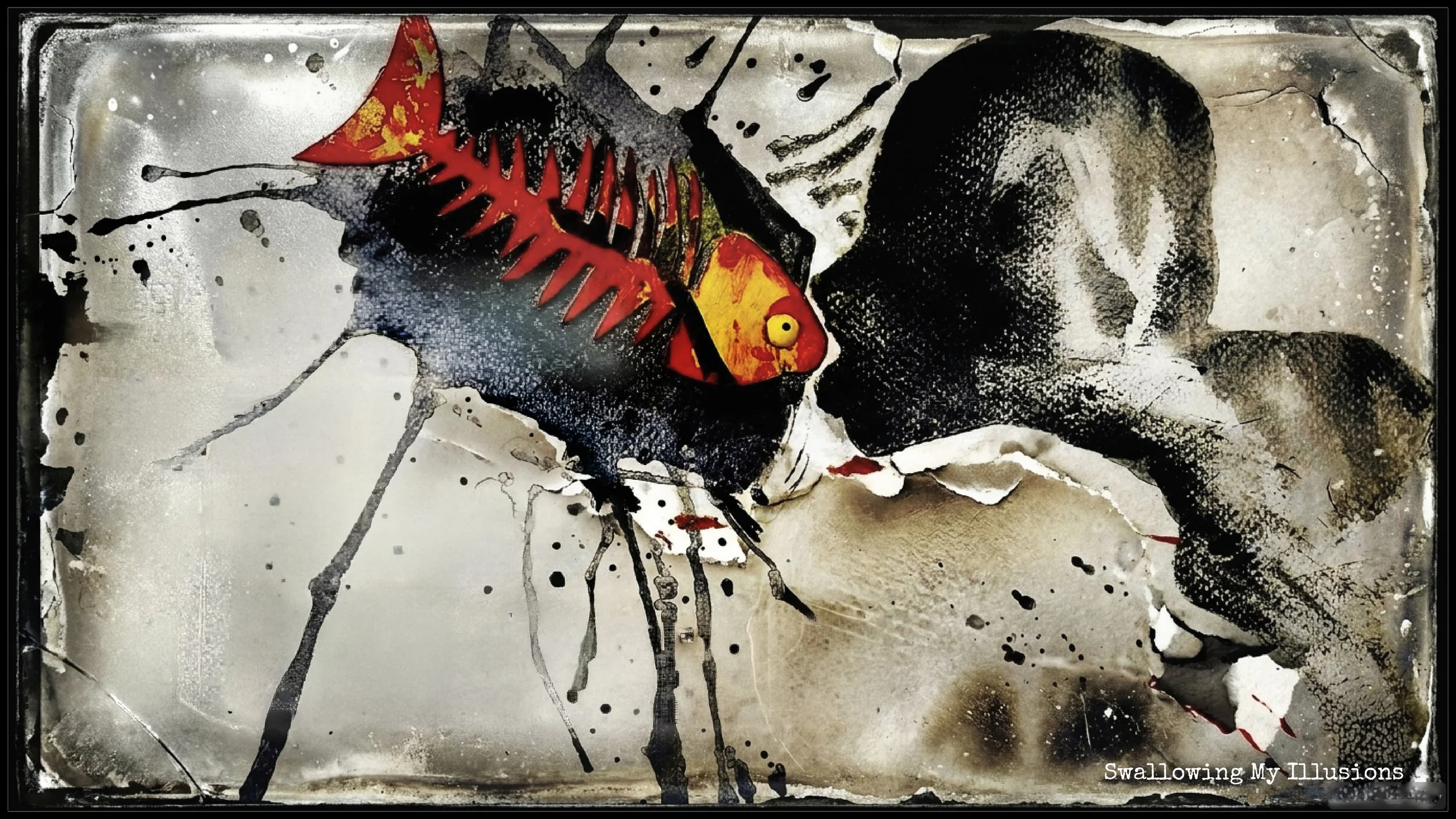
Chapter 10: The Anxiety Beneath It All
The chapter opens with an idea that has followed me through much of my life as an artist:
Art begins where language falters.
There are experiences we can describe fairly easily. Then there are things that seem to resist language altogether. Fear. Grief. Longing. Uncertainty. Mortality. We feel them, sometimes intensely, without necessarily being able to say what they are.
Ernest Becker's work gave me a way to think about this. Most of us don't walk around consciously afraid of death. Mortality anxiety usually operates beneath awareness, buffered by the beliefs, identities, routines, and cultural structures that allow us to function.
Sometimes that buffer weakens.
We feel the pressure without necessarily understanding its source. It might appear as dread, overwhelm, numbness, or simply the strange feeling that something isn't quite right beneath the surface.
For me, this is where art becomes important.
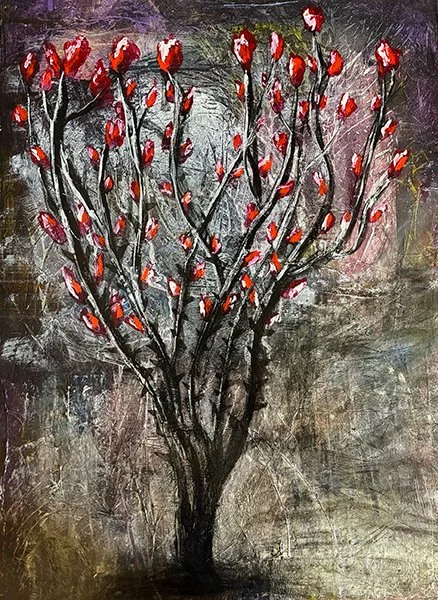
When we create, we can take something formless and give it boundaries. Fear becomes an image. Grief becomes a photograph. Anxiety becomes a mark on a surface.
Form is manageable. Form is containable. Form has edges. Death does not.
A painting can hold what a nervous system cannot. A photograph can absorb what a psyche cannot carry alone. A poem can approach something consciousness struggles to face directly.
This doesn't mean the experience disappears.
The artist metabolizes it.
That distinction is important to me because it shifts creativity away from the romantic idea of self-expression. The work becomes a container for something that otherwise has nowhere to go.
But Chapter 10 moves into more difficult territory from there.
Creative practice repeatedly brings artists close to the edges of their own worldviews. We begin noticing the cracks in cultural stories. Things that once seemed permanent or self-evident start looking constructed, inherited, provisional.
Art can make those structures visible.
And that is partly why art can become threatening.
Terror Management Theory suggests that mortality awareness can intensify our attachment to the worldviews that give us psychological security. When those structures are threatened, people may defend them more aggressively.
Art sometimes does precisely the opposite. It loosens certainty. It reveals contradiction. It exposes the machinery of meaning-making.
The deeper function of art, then, may not always be to comfort us. Sometimes its function is to reveal.
This is where Chapter 10 connects strongly with the ideas I've been developing around rupture. What happens when meaning begins to fail? What happens in that interval before we rush to repair the fracture with another certainty?
Perhaps we can remain there for a moment.
That possibility matters because our inability to tolerate uncertainty may have consequences far beyond individual anxiety. When existential threat becomes unbearable, we may seek certainty, harden our worldview, and defend the symbolic structures that make us feel secure.
Creative practice offers another possibility: staying near the instability without immediately resolving it.
Not forever. Not without psychological limits. But long enough to see what is actually there.
This is why I describe art as a kind of training for existential muscles we don't often use.
A photograph of decay, a painting of grief, or a poem about longing lets us approach mortality symbolically. We can lean toward the thing we fear without being completely engulfed by it.
Art doesn't eliminate terror. It teaches us how to hold it.
Increasingly, I think this capacity to hold is central to the work I'm doing now.
The question isn't simply how we construct better meanings after something breaks. I'm becoming more interested in the interval before reconstruction, when the old meaning has failed and something new hasn't yet taken its place.
Can we inhabit that instability without immediately converting it into certainty?
Can we witness anxiety before it becomes defense?
Can we remain present long enough to understand what is actually happening?
Those questions reach beyond Glass Bones. They're becoming central to Rupture and to the larger framework I'm developing around creative practice and mortality awareness.
Perhaps art gives us a place to practice.
Not transcendence. Not escape.
Presence inside impermanence.
And the willingness to stay there long enough to see what emerges.