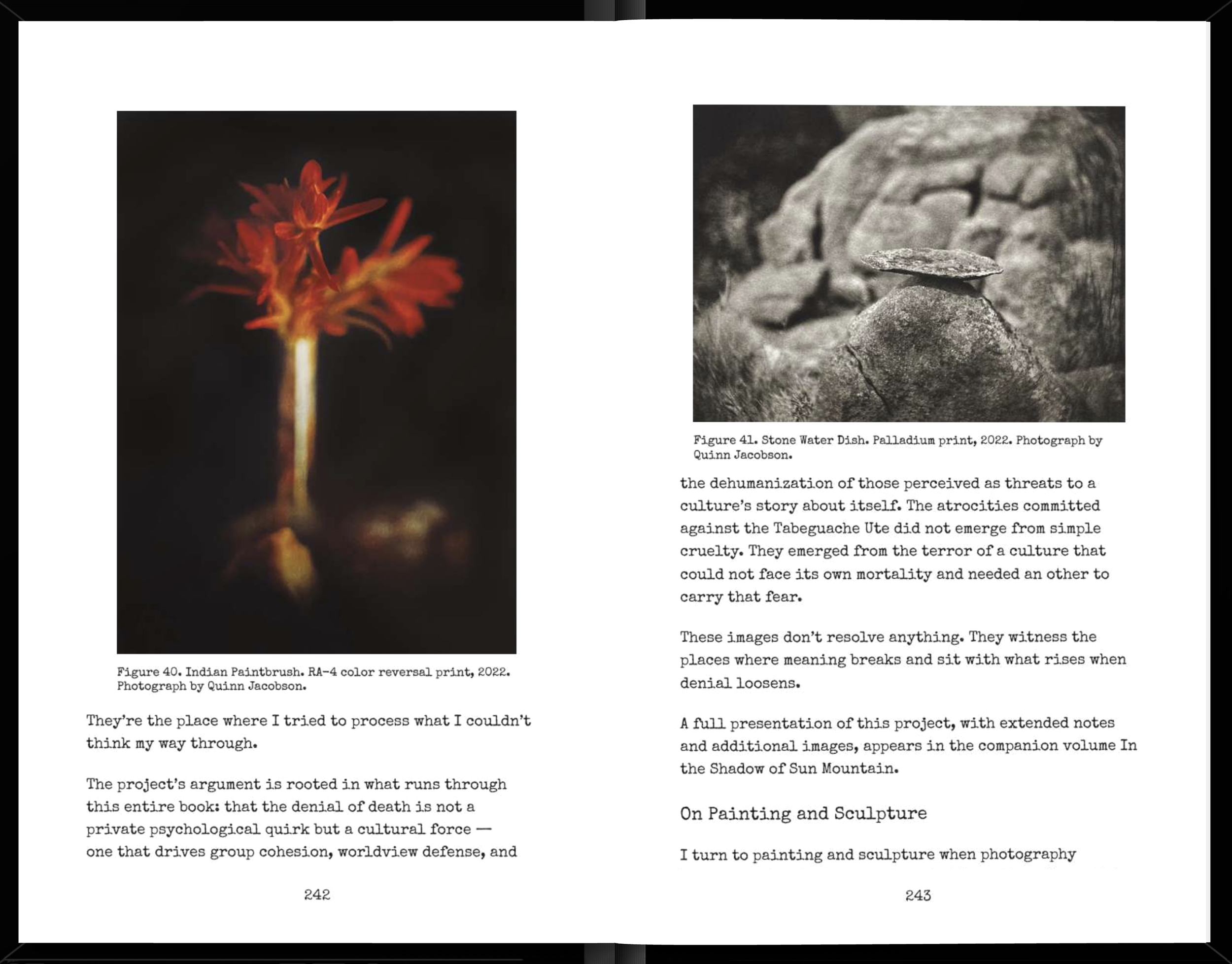
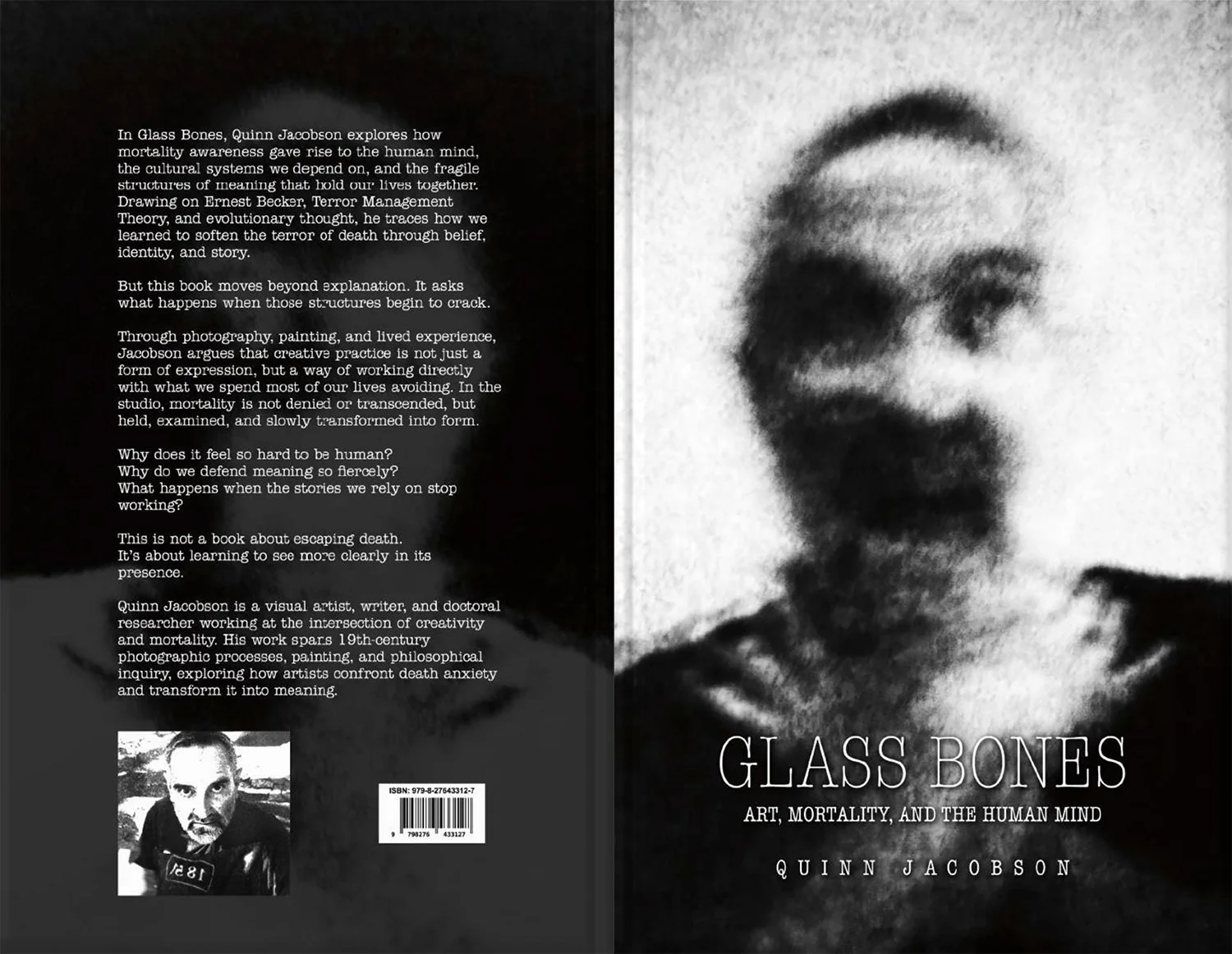
I wanted to share a few pages from Glass Bones—a glimpse into how the book is beginning to take shape as a physical object.
I’m still working. Still in the darkroom, still at the canvas, still refining the manuscript. Every day. But it’s close now. Close enough that I can begin to think less about what it is becoming and more about where it might live once it leaves my hands.
Right now, I’m planning a small hardback run (5.5” x 8.5”)—somewhere in the range of 250 to 300 copies. Not because I expect a large audience, but because I’m more interested in placement than scale. This isn’t a commercial project. It moves in the opposite direction.
What I keep returning to is the idea of libraries, especially at art schools. It’s a niche path, but that’s always been where this work lives.
There’s something compelling about the possibility that this book could sit quietly on a shelf, embedded within a larger system of knowledge, waiting for the right kind of encounter. Not driven by visibility or promotion, but by proximity. Someone searches for a keyword—mortality, art, psychology, violence, or meaning—and this object appears. They take it down. Spend time with it. Or don’t. But the encounter remains possible.
In that sense, distribution becomes part of the work.
If Becker is even partially right that culture functions as a buffer against the anxiety of death, then placing a book like this into public collections may operate as a small countercurrent. Not as a corrective, exactly, but as an opening. A space where the usual defenses are not reinforced but perhaps loosened.
Because this project doesn’t offer resolution.
Much of the work moves through sites of rupture—historical, psychological, and cultural. The violence enacted against the Tabeguache Ute, for example, is not framed as an aberration of cruelty but as something emerging from a deeper structure. A culture unable to face its own mortality displaces that terror outward, producing an “other” to carry what it cannot hold itself.
The images that follow don’t attempt to resolve that. They witness it.
They sit in the places where meaning breaks down and remain there long enough for something else to surface—something less stable, but perhaps more honest.
There will be a digital version. An audiobook as well. Both extend access, which matters. But they inevitably flatten part of the experience. The scale of the images, the pacing, the way text and image occupy the same field—those things don’t translate cleanly.
This has always been a hybrid project. Part book, part object. Something meant to be read but also handled. Something that lives not just in circulation but in place.
More soon.
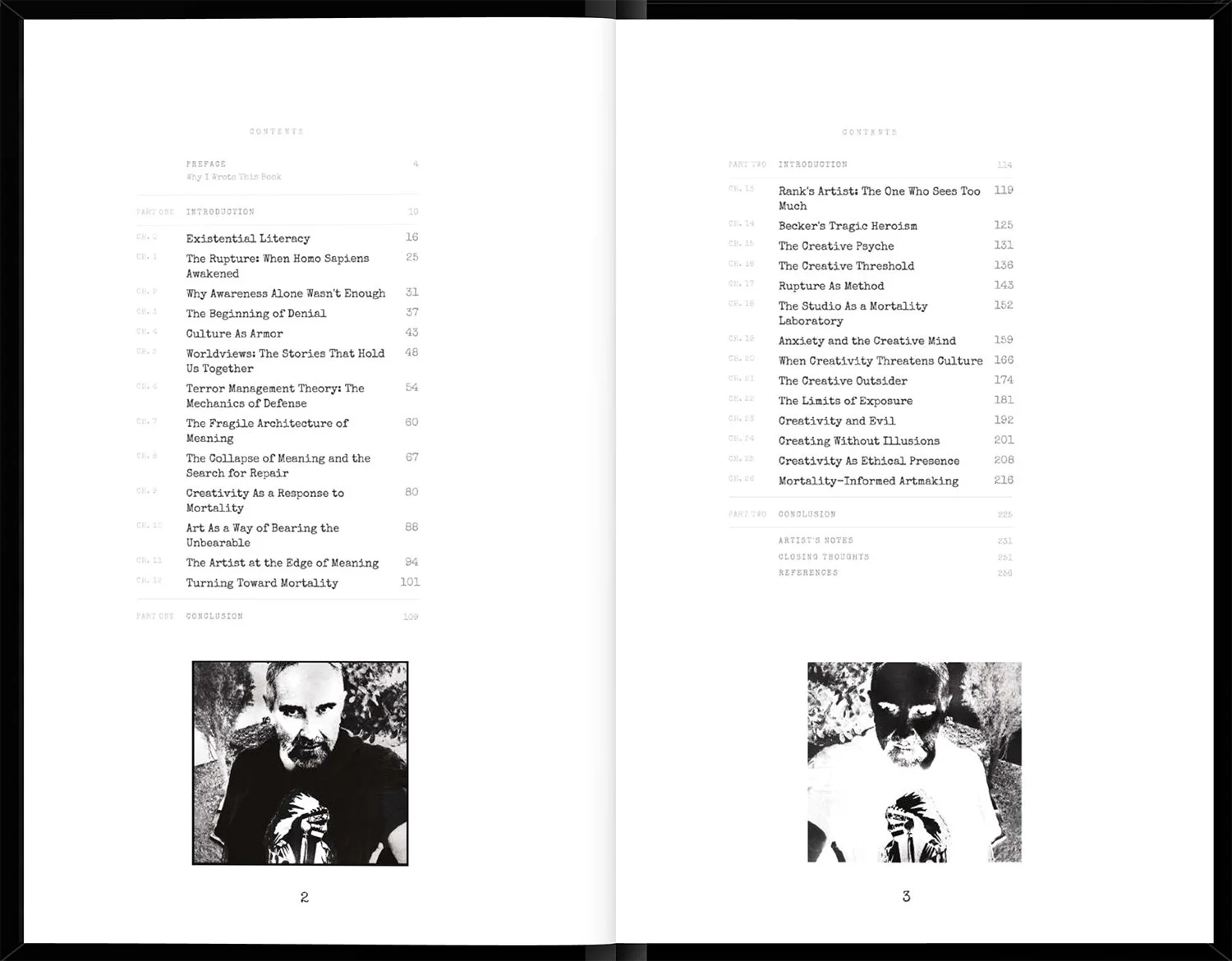
Table of contents.
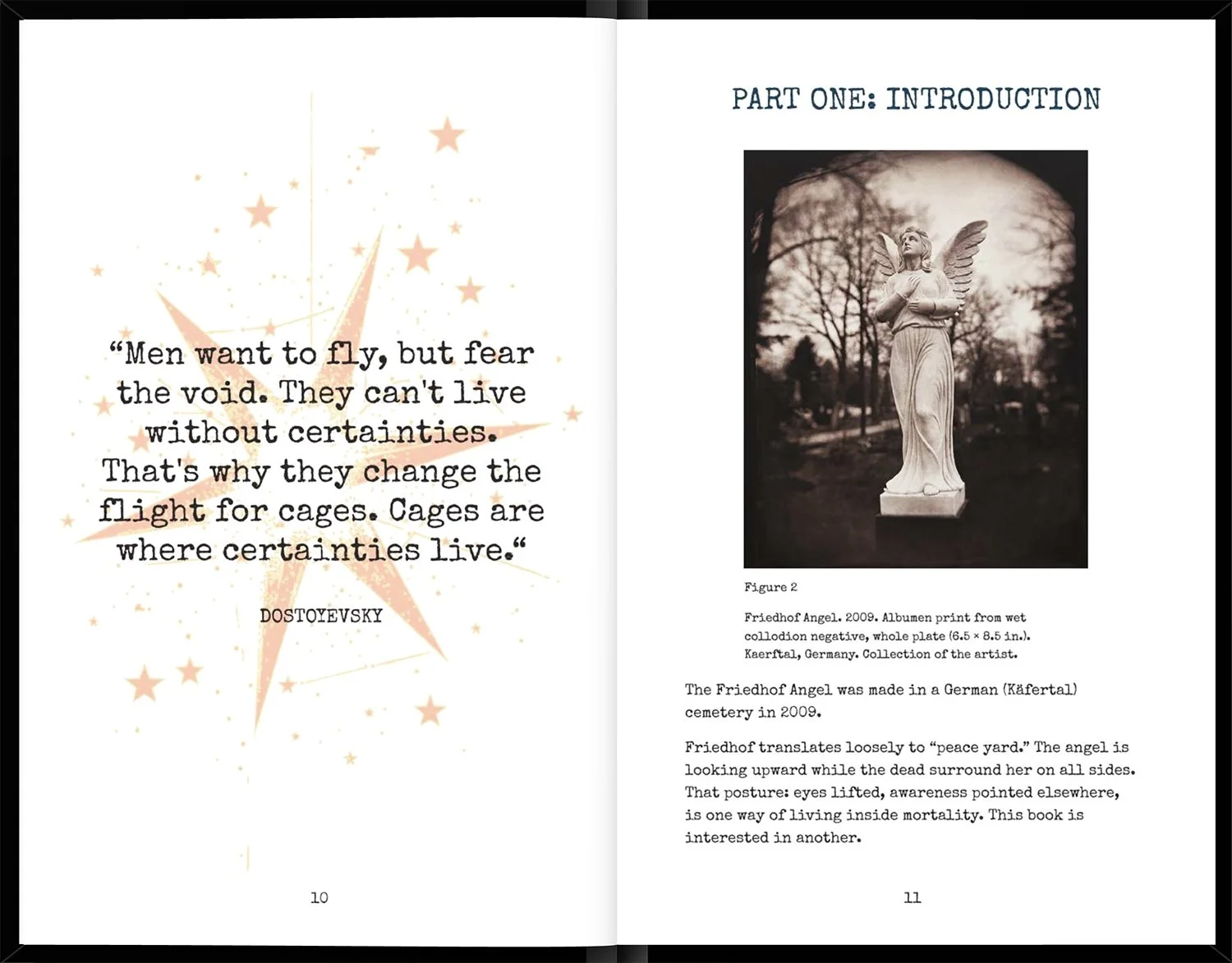
How each chapter begins: a quote and an image somewhere within the chapter or at the end.
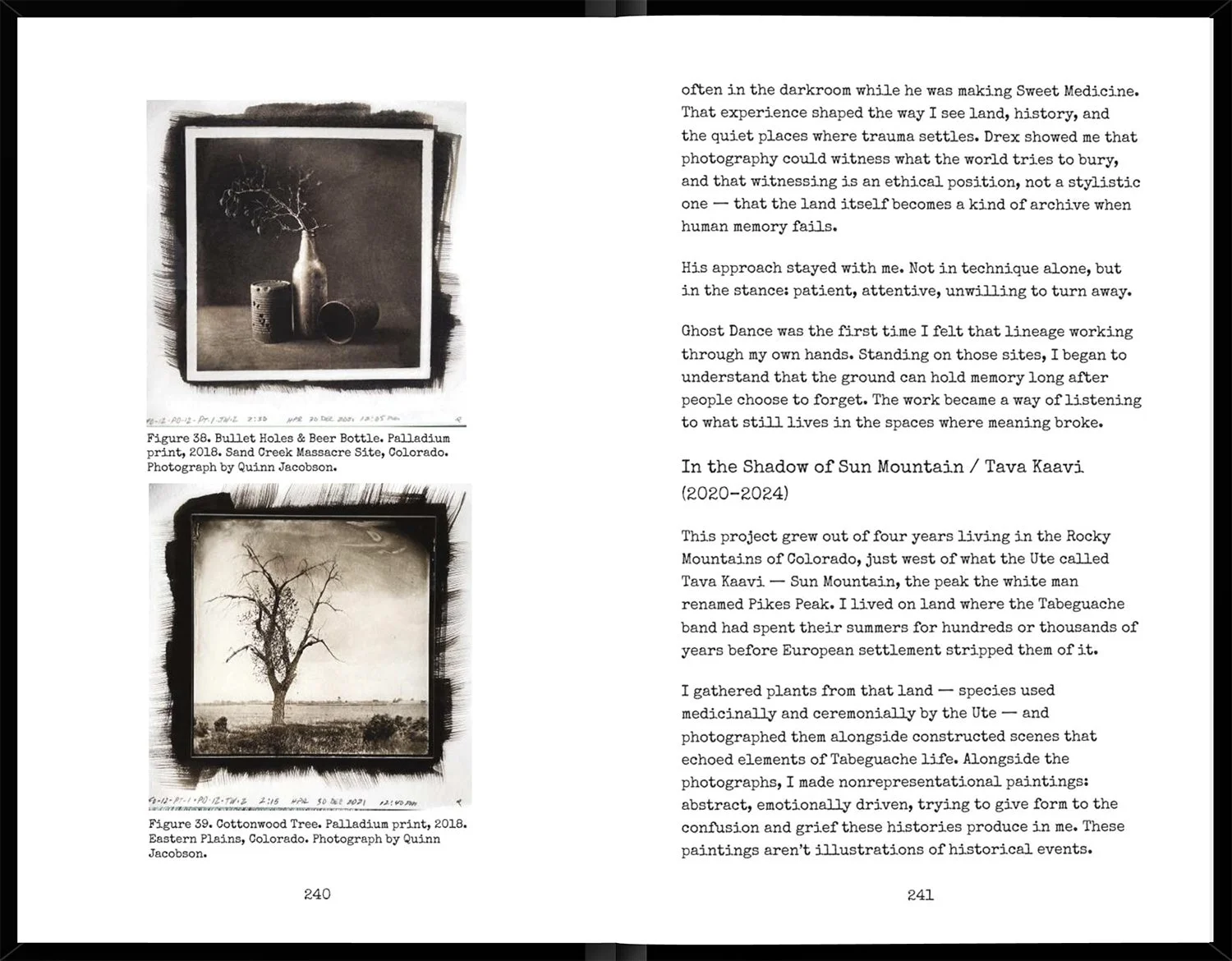
At the end of the book, I cover my work over the past 30+ years.