
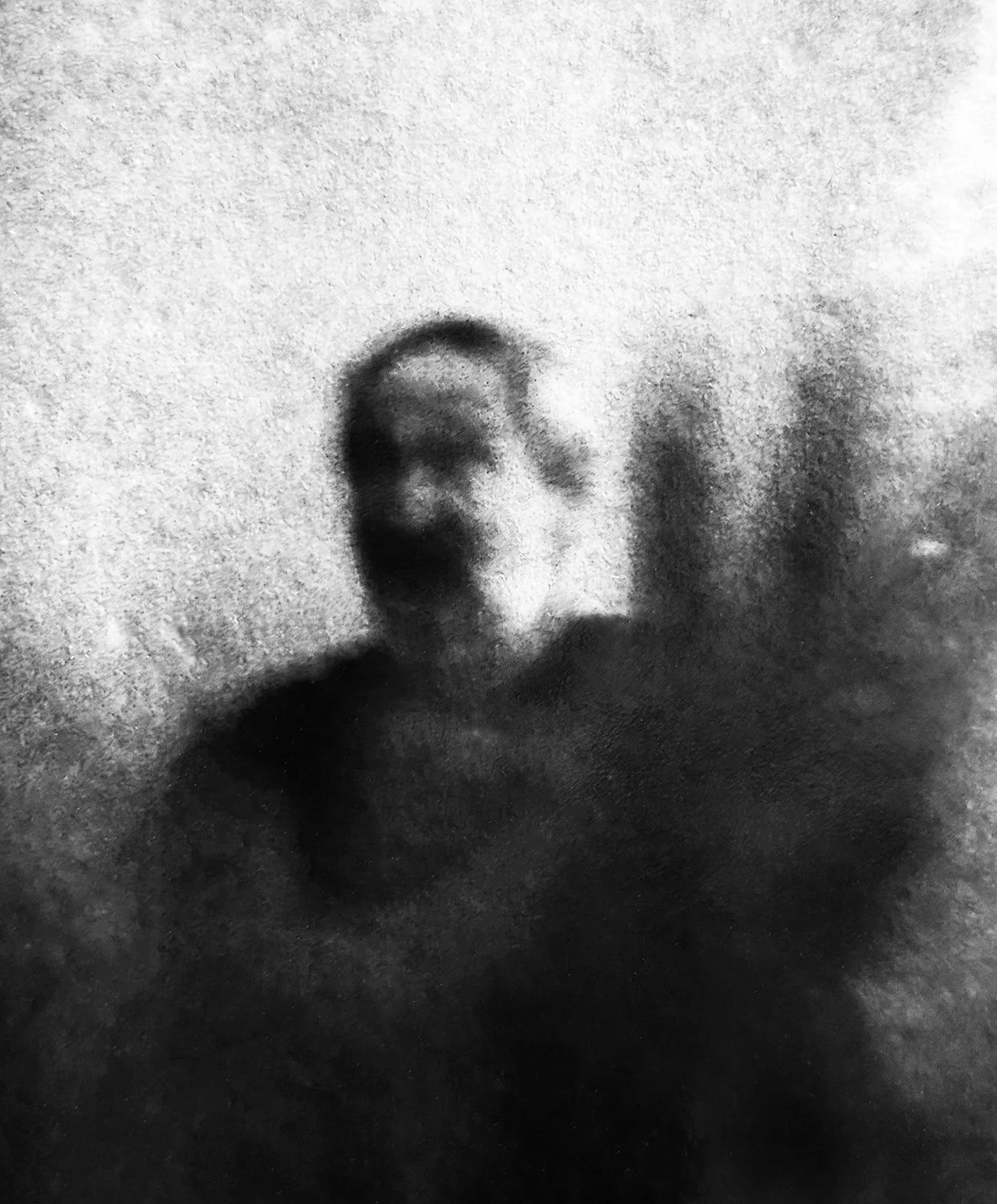
Why Not Just Buffer?
Buffering is the psychological and cultural process that regulates our awareness of death, embedding it within beliefs, identities, and meanings that make it tolerable enough to live and function. Most of us do this constantly, automatically, and without knowing it. The question worth sitting with is not whether buffering happens, but what it costs, and whether there is anything worth preserving on the other side of it.
Why not simply buffer and numb out to the reality of mortality? If it keeps us functional, stable, even relatively content, why not leave it in place?
One answer is pragmatic: in many cases, we probably do need some degree of numbing. Becker, Zapffe, and the Terror Management theorists who followed them are fairly clear on this. Zapffe, the Norwegian philosopher whose work predates and in some ways anticipates Becker's, argued that human consciousness is biologically overbuilt for survival. In "The Last Messiah" (1933), he wrote that we are the only creatures who can foresee our own deaths, and that this foresight is not a gift but a burden we spend most of our lives managing through what he called anchoring: attaching ourselves to fixed values, identities, and purposes that hold the abyss at a manageable distance. A fully unfiltered awareness of mortality is not something most people can sustain without consequence. The real question, then, is not whether buffering exists, but how much of it we rely on, and at what cost.
The argument for remaining conscious, at least intermittently, has less to do with moral superiority and more to do with what becomes available when the buffer loosens. When mortality is not fully suppressed, certain patterns become visible: the contingency of one's worldview, the constructed nature of identity, the fragility of meaning. That recognition can be destabilizing, but it can also open a different kind of responsiveness.
From one angle, this is about accuracy. You see more of what is actually structuring your experience rather than mistaking the structure for reality itself. That doesn't dissolve the structure, but it introduces a degree of reflexivity. You are not only inside it; you are also aware of being inside it.
From another angle, it shifts the register of creative work. If anxiety is only buffered, it tends to get displaced into symbolic systems that reinforce the existing worldview. If it is metabolized, even partially, it can move through the work differently, less as defense and more as material. That is where the distinction between buffering and processing becomes meaningful. It is not that one eliminates anxiety while the other doesn't. It is that one reorganizes how anxiety circulates. Rank made a related observation in Art and Artist (1932), arguing that the creative act is never simply a resolution of anxiety but a repeated negotiation with it, one that can either fortify the existing character structure or, in rarer cases, begin to transform it.
There is also an ethical dimension, and it is sharper than it might first appear. In Escape from Evil (1975), Becker argues that the same defensive structures which protect the individual from death anxiety can, under pressure, harden into aggression toward those who embody a different answer to the problem of mortality. We don't buffer privately alone; we buffer collectively, and we tend to protect those buffers by marginalizing or harming whoever threatens them. Greater consciousness doesn't automatically dissolve this dynamic, but it does make it harder to participate in unconsciously. You begin to see the mechanism, and seeing it introduces at least the possibility of refusal.
At the same time, there is no guarantee of relief or clarity. In some cases, increased awareness simply intensifies the tension. That is why many traditions, philosophical and religious alike, have treated this not as something to be exposed but contained. The Stoics practiced memento mori as a disciplined, bounded form of mortality awareness, not an invitation to sustained exposure (Marcus Aurelius, Meditations, c. 161–180 CE). The point was regulation, not immersion.
What Does a Fully Unbuffered Life Actually Suffer?
If you take the idea seriously, "fully unbuffered" is not just more awareness. It is a qualitative shift in how experience is organized.
At the psychological level, the first consequence is overwhelm, not in a vague sense but something closer to what Becker describes in The Denial of Death (1973) as the terror that symbolic systems exist to manage. Without the usual filters, mortality is no longer abstract or deferred. It becomes immediate, pervasive, and difficult to bracket. The ordinary scaffolding that keeps experience coherent begins to loosen, and what follows can register as acute anxiety or panic.
Cognitively, meaning itself begins to destabilize. If cultural narratives, identities, and purposes are seen through completely, they may lose their binding force, not because they are simply false but because their constructed nature is no longer hidden. The risk is not just doubt. It is a kind of flattening, where distinctions between what matters and what doesn't become harder to sustain. That can slide toward nihilism or toward a collapse of motivational structure. Yalom describes something like this in Existential Psychotherapy (1980), noting that confrontations with mortality, when uncontained, can produce not liberation but a disorienting loss of the ordinary purposes that structure daily life.
Functionally, this matters. Action depends on a certain degree of selective blindness. You go to work, make plans, take risks, invest in relationships, all under conditions where death is backgrounded. If it moves fully into the foreground, it can interrupt those processes. Why build, strive, or commit if the endpoint is not just known but constantly present? Some people might still act, but the basis for action shifts, and often weakens.
There is also a social cost. Shared worldviews are not only individual defenses; they are collective agreements, what TMT researchers Greenberg, Pyszczynski, and Solomon (1986) describe as culturally constructed realities that function precisely because their members treat them as given rather than chosen. When one person steps too far outside them, communication strains. You begin to see the rules of the game while others are still playing it as if it were simply the world. That produces a particular kind of isolation, not dramatic, not always chosen, but persistent.
At the extreme, what full unbuffering describes starts to resemble states that clinical psychology would classify as pathological: severe anxiety disorders, depersonalization, certain forms of existential depression. That does not mean the perception is wrong. But it does suggest that the human system is not built to sustain that level of exposure continuously.
Which is why the metaphor of a dimmer switch is more useful than an on/off toggle. It implies regulation rather than elimination, a system that allows glimpses, moments where the structure thins and something more fundamental shows through, before reconstituting itself so that life can continue. The question is not how to remove the buffer entirely. It is how to move along that spectrum without collapsing; how to see more, at intervals, and still remain capable of living, acting, and making. That is the territory this work tries to stay inside, not because it is comfortable, but because it is honest, and because something that might be called clarity, or at least a less mediated relationship to being alive, waits on the other side of looking.
References
Aurelius, M. (2002). Meditations (G. Hays, Trans.). Modern Library. (Original work written c. 161–180 CE)
Becker, E. (1973). The denial of death. Free Press.
Becker, E. (1975). Escape from evil. Free Press.
Greenberg, J., Pyszczynski, T., & Solomon, S. (1986). The causes and consequences of a need for self-esteem: A terror management theory. In R. F. Baumeister (Ed.), Public self and private self (pp. 189–212). Springer.
Rank, O. (1932). Art and artist: Creative urge and personality development (C. F. Atkinson, Trans.). Alfred A. Knopf.
Yalom, I. D. (1980). Existential psychotherapy. Basic Books.
Zapffe, P. W. (1933). The last messiah (G. R. Tangenes, Trans.). Philosophy Now, 45, 21–24. (Original work published 1933)