
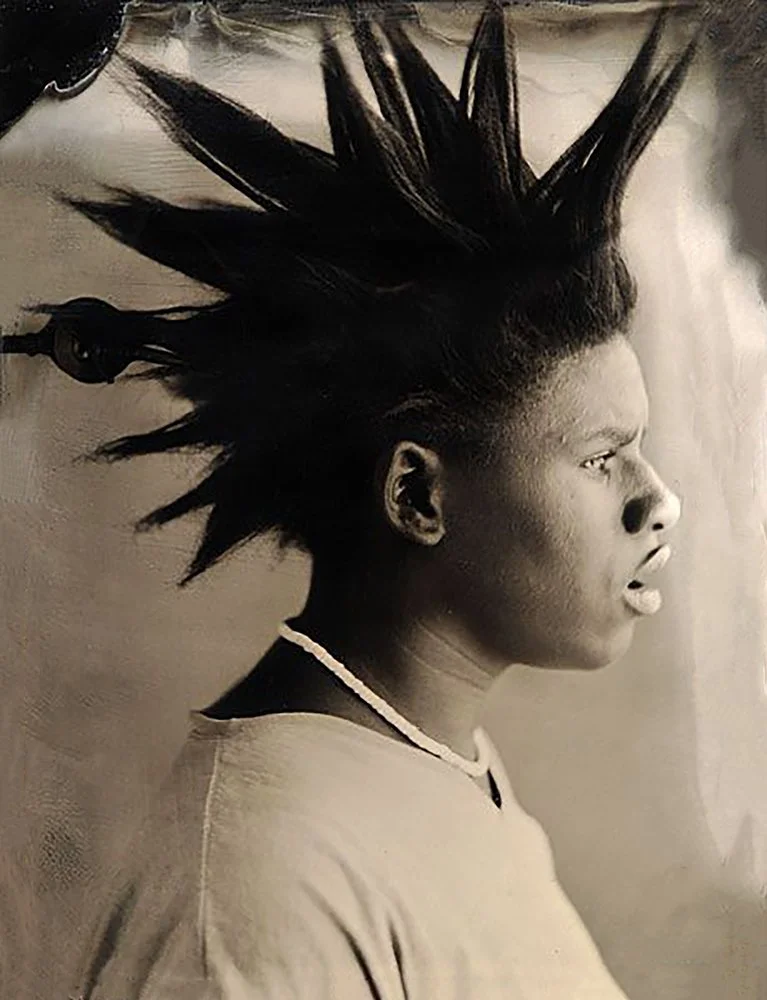
There’s a point in a long practice where the material starts talking back, not metaphorically, but structurally. It resists you in ways that feel less like failure and more like disclosure. That’s roughly where this document lands for me. Not as a proposal in the conventional academic sense, but as a recognition that the work has already been doing something I’m only now beginning to articulate.
What I’m circling here, perhaps a bit cautiously, is a shift away from the idea that art functions primarily as a buffer against death anxiety. That Beckerian frame still holds enormous explanatory power. It’s difficult to ignore how much of culture operates as a defense structure, a symbolic architecture designed to stabilize us against the knowledge of our own finitude. But in the studio, something else happens. Or at least, something else can happen. The work doesn’t always console. It doesn’t necessarily sublimate or elevate. Sometimes it does the opposite. It stays with the wound.
The “wounded plate” emerges out of that recognition. Not as a stylistic choice, and not even as an aesthetic category in the usual sense, but as a condition. A plate that has been pushed, mishandled, or chemically distressed—brought to a point where resolution becomes difficult, maybe even impossible. There’s a temptation to read that as imperfection or to rehabilitate it through familiar tropes of beauty-in-flaw. I’m not convinced that’s what’s happening. It feels closer to an enactment than a representation. The plate doesn’t show damage. It undergoes it.
That distinction is important. Representation allows distance. Enactment collapses it.
If I’m honest, this complicates some of the assumptions I’ve been working with for years. The idea that creativity functions as an “immortality project” has been a useful frame, especially within Terror Management Theory. But it may be too narrow, or at least incomplete. There are practices—this might be one of them—where the aim isn’t symbolic endurance or transcendence. The aim, if that’s even the right word, is closer to sustained contact. A kind of practiced proximity to the conditions we usually spend our lives managing or avoiding.
That’s where the process starts to take precedence over interpretation. I’m less interested in what the image means and more interested in what was done. The cuts, the chemistry, the sequence of actions that led to this particular surface. It’s not that meaning disappears. It just arrives later, and perhaps more tentatively. The plate seems to know something before I do. Or at least it holds something that resists immediate translation.
This is where the gap opens up. Between what the plate knows and what theory can say about it. I’m not inclined to resolve that gap too quickly. If anything, it may be the most important part of the inquiry. Theory tends to stabilize. It names, organizes, situates. That’s useful, even necessary. But the plate doesn’t stabilize. It deteriorates, reacts, breaks down. It behaves more like a body than an image.
And that brings me back to the central tension in the document. What happens when the process itself becomes the argument? When the work is no longer illustrating an idea but generating it? I’m not entirely sure yet. There’s a risk in stepping back, in letting the process lead without immediately framing it. It can feel like giving up control, or worse, like abandoning rigor.
But there’s another possibility. That rigor might look different here. Less like explanation, more like attention. Less like resolution, more like staying with what doesn’t resolve.
The wounded plate doesn’t redeem anything. It doesn’t offer closure. If anything, it intensifies the condition it emerges from. And yet, there’s a kind of honesty in that. A refusal to convert mortality into something more palatable.
I suspect that’s what I’m really after. Not a new aesthetic, and not even a new theory, but a different relationship to what the work is doing. One that doesn’t rush to translate the experience into meaning but allows the experience to remain active, even unsettled.
The plate is not a picture of something dying. It is a small, controlled instance of dying. Repeated. Observed. Held.
And maybe that’s where the knowledge is. Not in what we say about it afterward, but in the fact that we stayed with it long enough to let it happen.