• blog
  • in the shadow of sun mountain
  • buy my books
  • photographs
  • paintings
  • bio
  • cv
  • contact
  • search
Menu

Studio Q Photography

Exploring Human Behavior and Death Anxiety Through Art
  • blog
  • in the shadow of sun mountain
  • buy my books
  • photographs
  • paintings
  • bio
  • cv
  • contact
  • search
×

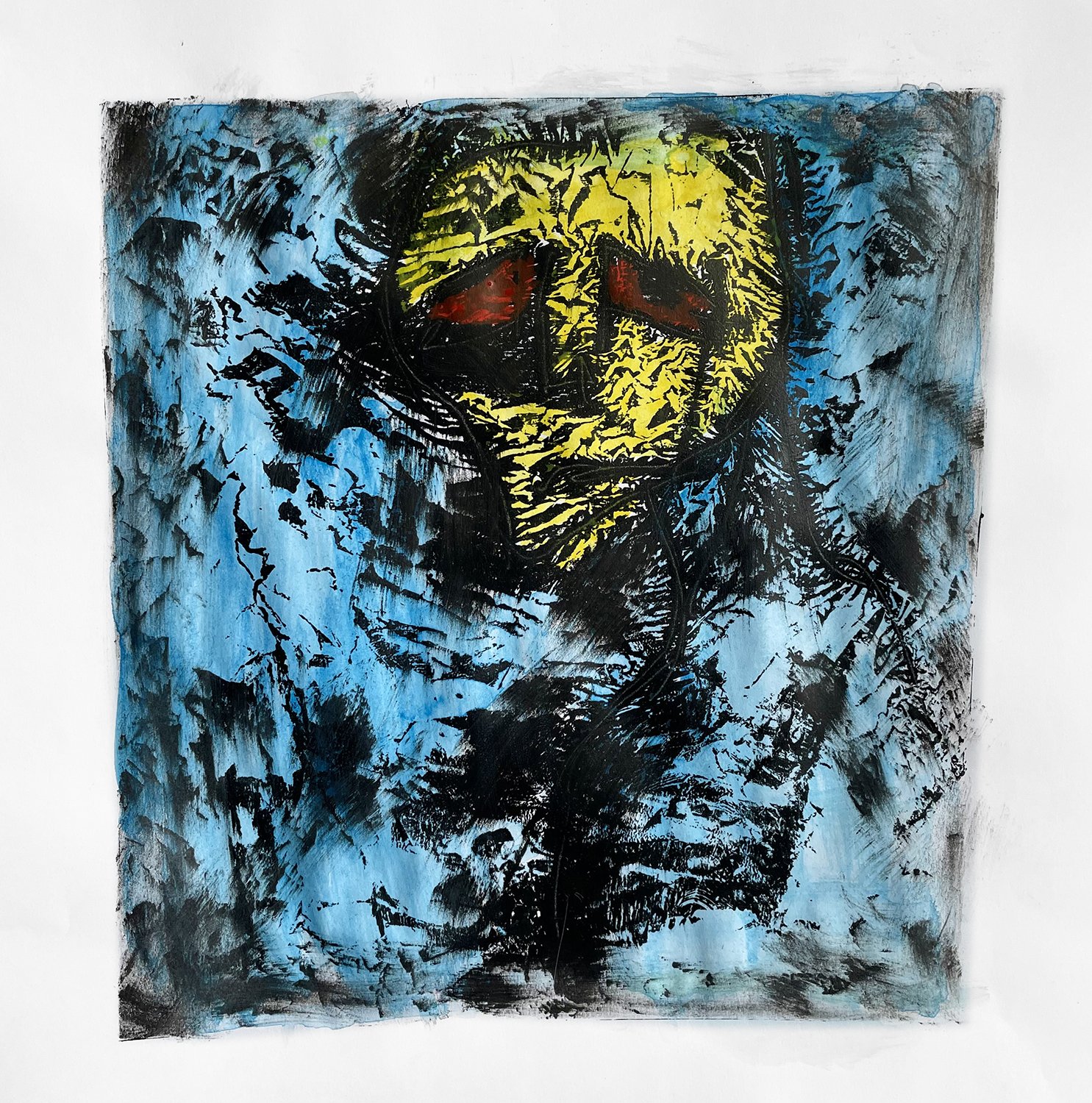
“Existential Dread No. 7,” 8” x 10” acrylic and charcoal (mixed media) on paper.

Thirty Paintings a Month

Quinn Jacobson January 8, 2024

I paint every day. Sometimes, I’m able to make two or even three paintings a day. Mostly, I do “warm up” paintings: ideas for possibly larger pieces in the future. These “paint sketches” are really important for me. They do two things: first, they allow me to apply paint, make marks, and give me ideas for larger pieces (as I said). Secondly, I get better with each painting. With every painting I make, I learn something. One thing I’ve realized (probably from making photographs for years) is that I’m too “uptight” and too rigid. I’m slowly learning to reverse this; it’s difficult. In a lot of ways, I’m trying to unlearn what I did in photography. Yes, there are a lot of things that help me because of my knowledge of photography, light, composition, and even color theory. But there are a few things that make painting difficult; one of them is rigidity. I’m learning to loosen up and allow spontaneous and free-flowing movements and experiments to happen. It’s a great feeling.

I turn 60 years old this month. I was thinking about this the other day. It’s a strange feeling in some ways. It seems for the last decade I’ve been revisiting events of my youth, or at least exploring my interests as a younger adult. After my military service, I started a business making free-standing wood-burning stoves and fireplace inserts. I oversaw a shop of four welders and two finish line people. I made good money and enjoyed the work. I built hundreds of stoves myself and was efficient and skilled in metal fabrication. I was also proficient in all kinds of welding, including MIG, TIG, and stick welding, as well as brazing and other minor metal fabrication skills. This came to an end because of environmental issues concerning emissions and laws passed that prevented the sale of the stoves (the late 1980s). I ended up at the university, which, in the end, was a good thing.

A few years ago, I started metal fabrication again. I was doing blacksmithing and bladesmithing work. People asked, “Where did you learn to do this kind of thing?” They seemed to be a bit shocked and puzzled. It wasn’t either for me; it was taking a step back to my younger years and revisiting the skills and knowledge that I spent so much time doing. I’m not sure why I did it—maybe to clear my head and create in a different way. It just felt right and comfortable. I really enjoyed the nostalgia and feelings of shaping steel and working around a hot forge and welder again. It wasn’t foreign or weird to me at all.

That brings me to painting. Again, some people are wondering, "What is this all about?” Well, remember, I did four years at undergraduate school, and I majored in photography, visual art, and communication (with a minor in Spanish). In that emphasis of visual art, I did the introductions to painting, drawing, color theory, art history, etc. I also completed 8 credit hours of “studio art.” I did painting and mixed media, with a lot of photography involved. Along with those courses, I completed two courses in “painting on photographs,” a beginning course and an advanced course. And I also have a graduate degree, an M.F.A.I.A. That’s a master of fine arts in interdisciplinary art. That is self-explanatory, I think. My point is that I have a history of what I’m doing and have been doing. I’m simply revisiting my past and using it to flesh out my new work and project. And I love it. If I take up surfing or paragliding, you’ll know I’m in unfamiliar waters (no pun).

I find it interesting that people tend to want you to stay in the lane they “know you for,” and when you veer from that, it seems a bit apostate to them—some even seem disappointed. If they understood your background and life experiences, they might think differently. In the end, it doesn’t matter. I just thought I would share what I’d been thinking about entering my sixth decade on this pale blue dot. It’s not surprising that I find myself painting or making knives; at least to me, it seems like a kind of natural course of self-exploration. It’s paid off for me both mentally and conceptually. It’s given me more to work with on this project.

Thirty paintings a month. It’s not about the number; it’s not even relevant, really. It’s about commitment, learning, and growing. As I said earlier, I gain so much from each painting I do. I’m trying to be present for the journey. To really be grateful and appreciate each day and each piece of work I make. Ultimately, that’s what’s important to me. Painting, like photography, is something you have to practice to become efficient enough to accomplish what you want to accomplish. In the end, I hope to publish several of my paintings, along with my photographs, in my book to make a complete, cohesive, interdisciplinary work about human behavior and existential terror. That’s my goal.

One more thing. I’ve posted a few times about how beneficial our walks are to me creatively. You might find this article interesting if you subscribe to this theory about walking and creativity. Check it out:
How Walking Fosters Creativity

In Acrylic Painting, Abstract Painting, Art & Theory, Ernest Becker, Mixed Media, Non-objective Painting, Non-representational, Painting, Philosophy, Terror Management Theory Tags Painting, acrylic painting, Mixed Media
2 Comments

“The Color Blue and the Number Three,” 8” x 10” acrylic and charcoal on paper.

The Color Blue and the Number Three

Quinn Jacobson January 7, 2024

In some Native American cultures, the color blue represents the sky, water, and the spirit world. It can also symbolize peace, serenity, and spiritual awareness. Blue is often used in ceremonies related to prayer, meditation, and vision quests. In Native American mythology, the number three represents the vertical picture of the world. It represents the space between the Heavens and the Earth.

The Iroquois tribe also expressed the significance of the number three by smoking from a pipe three times. Traditional Native American gardeners have planted the Three Sisters (corn, beans, and squash) in many different regions of North America. Some versions of the Three Sisters legends involve the crops personified as three women who separate from each other only to find out that they are stronger together.

In Acrylic Painting, Abstract Impressionism, Art & Theory, Painting, Native American Tags acrylic painting, charcoal, native american, In the Shadow of Sun Mountain
Comment

“Existential Dread No. 5,” 8” x 10” acrylic and charcoal on paper.

Existential Dread No. 5

Quinn Jacobson January 6, 2024

There is something that I find both intriguing and fascinating about non-objective abstracts. Yesterday, I posted my representational abstract, “The Ballad of Curtis Loew,” based on a song and memory. This is a painting I did today based on an idea from within me—nothing representational or based on anything physical, at least when I started the painting. I’ll let the viewer decide what they see or feel in reference to the title. I have to say, I do love the underpainting on this. It gives the piece a lot of depth. It looks really nice in real life.

In the context of evolution, human existential crises may arise from our heightened cognitive abilities and self-awareness. As humans developed intricate thinking processes and self-reflective capacities, an increased awareness of mortality, the quest for meaning, and contemplation of one's existence became more pronounced. While an existential crisis isn't necessarily a flaw, it can be viewed as a consequence of our advanced cognitive functions. It might function as a mechanism for individuals to scrutinize and assess their position in the world, fostering personal growth and the formulation of coping strategies. In this regard, it can be perceived as a beneficial function that motivates individuals to explore purpose and meaning in their lives.

Ernest Becker said, “What does it mean to be a self-conscious animal? The idea is ludicrous if it is not monstrous. It means to know that one is food for worms. This is the terror: to have emerged from nothing, to have a name, a consciousness of self, deep inner feelings, an excruciating inner yearning for life and self-expression, and with all this yet to die. It seems like a hoax, which is why one type of cultural man rebels openly against the idea of God. What kind of deity would crate such complex and fancy worm food?” (The Denial of Death)

In Acrylic Painting, Art & Theory, Consciousness, Denial of Death, Ernest Becker, Memento Mori, Non-objective Painting, Non-representational, Painting, Psychology, Shadow of Sun Mountain Tags acrylic painting, Ernest Becker, existential psychology
Comment

“The Ballad of Curtis Loew,” 8” x 10” acrylic and charcoal. Kind of a grisaille-style painting, minus the alizarin crimson as a focal point.

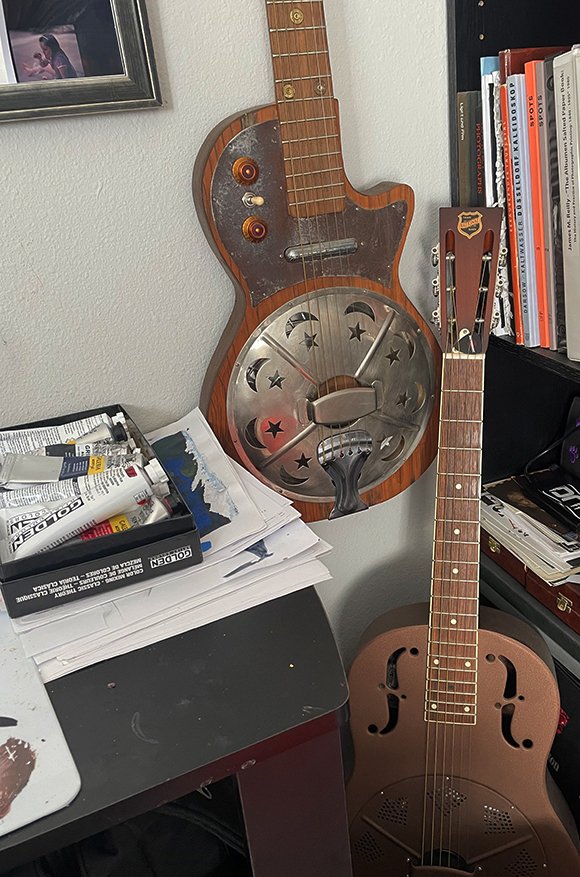
This painting is based on Lynyrd Skynyrd’s song of the same name. I love music, especially blues, and have been known to bang on my Dobro once in a blue moon. I was painting something else the other day, and this song came onto my playlist, and I looked over at my National Dobro and wanted to make a painting. The song deals with “otherness” and poverty, alcoholism as well as memory. There’s so much to unpack, but I’m moved mostly by the significance of marginalizing human beings, memory, and music. I had some similar experiences as a young boy. This song really resonates with me.

How Self-Awareness Awakens You

Quinn Jacobson January 5, 2024

Do you think you’re self-aware? How do you know if you are? Here are a couple of questions you can ask yourself:. Do you understand your strengths and weaknesses? Do you practice empathy? Do you recognize your biases? Do you seek personal growth? Etcetera.

Being self-aware is the first step in understanding both who you are and your position in the world or your culture. And yes, it does feed back to death anxiety and terror management theory. However, part of coming to terms with mortality relies heavily on self-awareness. I often quote Albert Camus; he said, "There is only one liberty: to come to terms with death; thereafter, anything is possible." The only way to do that is through self-awareness.

Have you ever been around a person who isn’t very self-aware? I have, and it’s very frustrating and annoying. When a person isn’t self-aware, you may see egotistical or even narcissistic behavior, as well as a complete disregard for other people’s intelligence or feelings. It’s a painful and disturbing experience. I’m on board for people to “toot their own horn” or share their accomplishments through the avenues where they find meaning and purpose. There’s nothing wrong with that. Where it goes off the rails for me is when they seek to “be better” or even belittle others with these accomplishments. When it becomes a competition, it can get ugly. This is the malignant result of existential dread. It’s nasty stuff. Social media is full of it.

Let’s stay on the positive side of dealing with meaning and self-awareness. Here are some questions you can ask yourself regarding this topic:. They are from a course I just completed about existential anxiety:

What are some accomplishments you have already achieved in your life that you find meaningful?

What goals or ambitions do you have for the rest of your life?

Who are the people who are most important to you in your life?

How do you demonstrate importance to these people in your life?

How do these behaviors, goals, achievements, ambitions, and intentions align with your culture and worldview?

These will help you start the process of both being self-aware and coming to terms with how you buffer death anxiety or existential dread. Which are kind of the same things or at least one leads to the other. This is the process I’ve used to become more self-aware and awaken to memories and meaning in my life. It’s the well-spring where I draw my inspiration and creative life from.

My view from my painting station. I listen to music, make marks and throw paint onto surfaces. A beautiful life.

In Acrylic Painting, Art & Theory, Dobro, Painting Tags Painting, acrylic painting, dobro, curtis loew
Comment

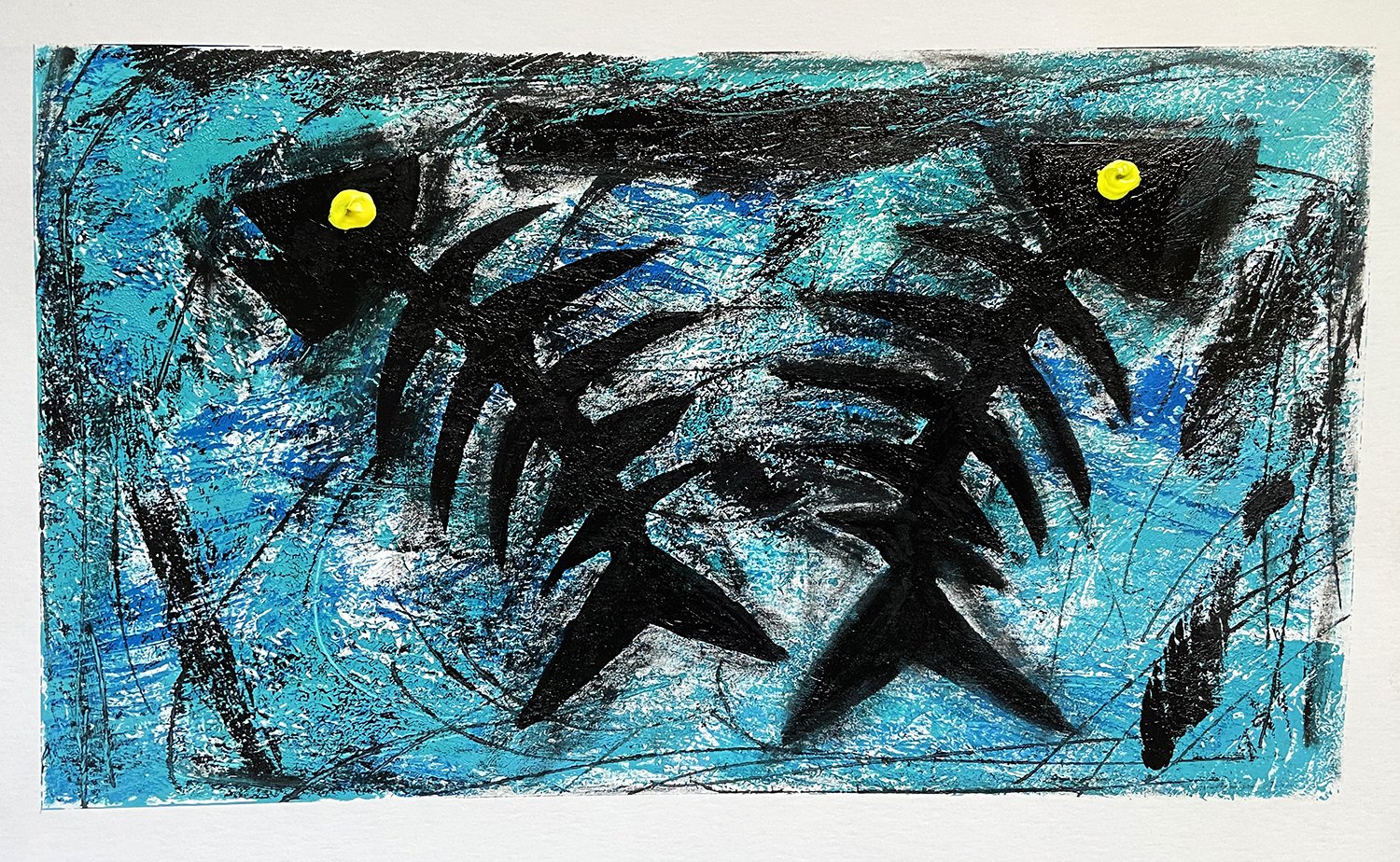
“Two Fish With Lemon Yellow Eyes No. 3,” 7” x 11” Acrylic and Oil

Two Fish No. 3

Quinn Jacobson December 7, 2023

I’m making a few paintings about fish (as you can see). I like the form and the symbol. As well as the variation you can get when painting these (as ideas for existential anxiety). Have you ever heard of ichthyophobia? The fear of fish—both dead and alive. The topic of fear interests me because it all relates to the fear of death.

In Art & Theory, Death Anxiety, Escape From Evil, Ernest Becker, Oil Paint, Painting Tags Painting, oil and acrylic painting
2 Comments

“Two Fish No. 1,” 7” x 11” Oil and Acrylic

Is it Something or About Something?

Quinn Jacobson December 5, 2023

“Fish Bones No. 1,” 6” x 6” (15 x 15 cm) Oil

Is it something, about something, or both? I’ve been trying to get my arms around avoiding the literal. It’s a difficult habit to break. Coming from photography, where everything is literal (even if it’s abstract), painting offers you a lot of freedom. Sometimes, that freedom causes you to freeze—it creates a barrier to making work that is less literal.

I have so many ideas that I want to paint; I’m just trying to find my way in with a blend of styles—impressionism and post-impressionism. Those are the movements that are most attractive to me. I would add some abstract impressionism in there too. These paintings I’m making will always be centered on Becker’s theories and terror management theory, but in a very non-literal way. Sometimes the content will be non-literal, and sometimes the ideas will be less than literal. It’s more of a personal journey than any kind of commercial process.

I said in my last post that I’m reading Rick Rubin every morning—early in the morning—and he’s been driving me to new places and trying new things. It’s liberating. He said, “Look for what you notice but no one else sees.” (Rick Rubin, The Creative Act: A Way of Being) That resonates with me deeply. I would say that is the core of my work (In the Shadow of Sun Mountain). I’m not sure that no one else notices, but the idea is to get away from the obvious, the literal, and the commonplace. I get it, and I agree.

“In terms of priority, inspiration comes first. You come next. The audience comes last.”
— (Rick Rubin, The Creative Act: A Way of Being

As I find my way through this iteration of the project, I do find my biggest obstacle to be literalism. I’m working to break the chains of photography and literalism and find my way to most representational work, even abstract in some sense. It’s a fun journey, and I encourage you to remember that you’re the creator of your work; you’re the one that needs to be happy with it. Another Rubin quote from his book is, “In terms of priority, inspiration comes first. You come next. The audience comes last.“ (Rick Rubin, The Creative Act: A Way of Being).

“Existential Dread No. 5,” 6” x 6” (15 x 15cm) Oil


In Art & Theory, Death Anxiety, Denial of Death, Ernest Becker, Oil Paint, Painting, Shadow of Sun Mountain Tags oil paint and watercolors, oil painting
2 Comments

“Existential Dread No. 1,” December 2, 2023, 6” x 6” (15 x 15 cm), Oil and Watercolor

The Implied and The Explicit

Quinn Jacobson December 4, 2023

I’ve been considering the words implied and explicit as they relate to art. When I think about photography, the word explicit comes to mind. It’s literal; it’s “of something.” Yes, it can be abstract, but it’s still something that exists. When I think about painting, sculpture, music, writing, etc., I think of the word implied. These mediums are less mechanical, most of the time. They are fashioned from nothing; the content usually doesn’t exist in “real life.” It can be an interpretation of something, but it’s always different.

“Art as a work in progress: All art is a work in progress. It’s helpful to see the piece we’re working on as an experiment.”
— Rick Rubin, “The Creative Act: A Way of Being”

My concerns and interests lie in impressionism, even abstract impressionism. To me, this form of art is the ultimate form of the word “implied.” There is so much freedom in making art that is less literal, more abstract, and less concrete. I can allow my mind to ponder the theories I’m interested in and create work that represents the ideas without being explicit. As I’ve grown older, I’m less interested in telling literal stories and more interested in exploring the emotions and feelings behind the ideas or concepts. I love photography and will continue to make photographs at some point, but for now, this is a much more powerful way for me to express my ideas.

I’ve been spending a lot of time reading and re-reading Rick Rubin’s book, “The Creative Act: A Way of Being.” He said, "Art as a work in progress: All art is a work in progress. It's helpful to see the piece we're working on as an experiment."

Photography has been a wonderful career for me. I made a living with it for many years and retired as a photographer. I’ve always loved it and appreciated it. As I’ve had time to think deeply about what I’m most interested in now, I find myself drawn to painting. For many years, I’ve threatened to start painting when photography doesn’t speak to me. I’ve dabbled in mixed media quite a lot over the years. In undergraduate school, I did a lot of experimental photography, even painting on images. But this is different for me now. I have specific ideas and themes I want to paint about. My Becker studies opened up so much for me, and I want to be free to express those ideas through post-impressionism, impressionism, and abstract impressionism. I’m no Pollock, no De Kooning, and surely no Van Gogh, but I know I have a voice in this medium.

My goal is to work through ideas and themes around death denial, death anxiety, terror management theory, gratitude, and humility. Those are the big-picture themes or ideas. I have several months now to paint because winter is here. Although I would be painting in the summer or in good weather too, it’s just a great winter activity. I’ll try to post occasionally about my progress. I’ve made 20–30 paintings so far and am still very much exploring techniques and ideas. Stay tuned!

“Existential Dread No. 1,” December 2, 2023, 6” x 6” (15 x 15 cm), Oil

“Existential Dread No. 2,” December 2, 2023, 6” x 6” (15 x 15 cm), Oil and Watercolor

In Art & Theory, Oil Paint, Painting, Philosophy, Terror Management Theory, Watercolor Paint, Creating A Body Of Work, death denial, Death Anxiety, Ernest Becker Tags painting, impressionism, oil paint and watercolors
Comment

“Crow and the Moon” monotype print, 9” x 12” (22,86 x 30,48cm) November 20, 2023.

Monotype Prints Made With Blocking Ink

Quinn Jacobson November 24, 2023

I’ve been experimenting with monotype prints for a while and am really enjoying the process. Sometimes, I print and then paint them after the blocking ink is dry. I use both watercolor and acrylic paint. I’ll show an example of one of those “post color” monotype prints later.

I’m exploring the same themes and ideas with these. I like the figures I’ve created and will continue to make prints as the inspiration hits me.

“The Alien and Two Graves” monotype print, 9” x 12” (22,86 x 30,48cm) November 23, 2023.

In Art & Theory, Death Anxiety, Shadow of Sun Mountain, Terror Management Theory Tags monotype
4 Comments

“Five Figures and Their Ghosts,” 9” x 9” (22,86 x 22,86cm) Acrylic painting, November 18, 2023

Lyrics Versus Music

Quinn Jacobson November 20, 2023

The weather has been so beautiful here. Jeanne and I have been able to do our 2.5- to 3-mile walk around the mesa every day for the past six weeks without missing a day! And most of the time, we wear shorts and t-shirts! Unbelievable! I know it will change soon, but I have been so grateful for the last 6 weeks and the beautiful weather we’ve had.

Most of the time, I listen to music on our walks. The other day, I was thinking about why I like music so much. I got thinking about the two dimensions, at least, of what I consider a good or great song. Do I like the lyrics, the music, or both?

As I pondered this question, I realized that it was a great metaphor for art in general. I would consider the lyrics of a song the “narrative” and the music the “aesthetics.” In other words, translating into a two-dimensional or three-dimensional piece of work (photograph, painting, sculpture, etcetera), the story would be the meaning behind the piece, and the “music” would be the visual appeal of the piece.

Most people are attracted to the visual, or the “music” of two-dimensional or three-dimensional pieces of work. It seems the narrative is sometimes difficult to understand or too large of an investment. I think back to when I bought Rush’s album, “2112.” It was released in 1976 as a concept album. Ask the young people today if they even know what that is; most won’t. I still listen to it and really enjoy the “story” that connects all of the songs. I don’t listen to any mainstream pop music. I like the old stuff or the newer (unknown) less popular music today. It’s all subjective, right? People like what they like for a number of different reasons.

So, the bottom line is: Do you like the lyrics? Do you like the music? Or do you like both? And what about instrumentals? It’s interesting to think about, and it provides a really solid connection to how to think about visual art.

In Acrylic Painting, Art & Theory Tags Lyrics and music, art theory, painting
Comment

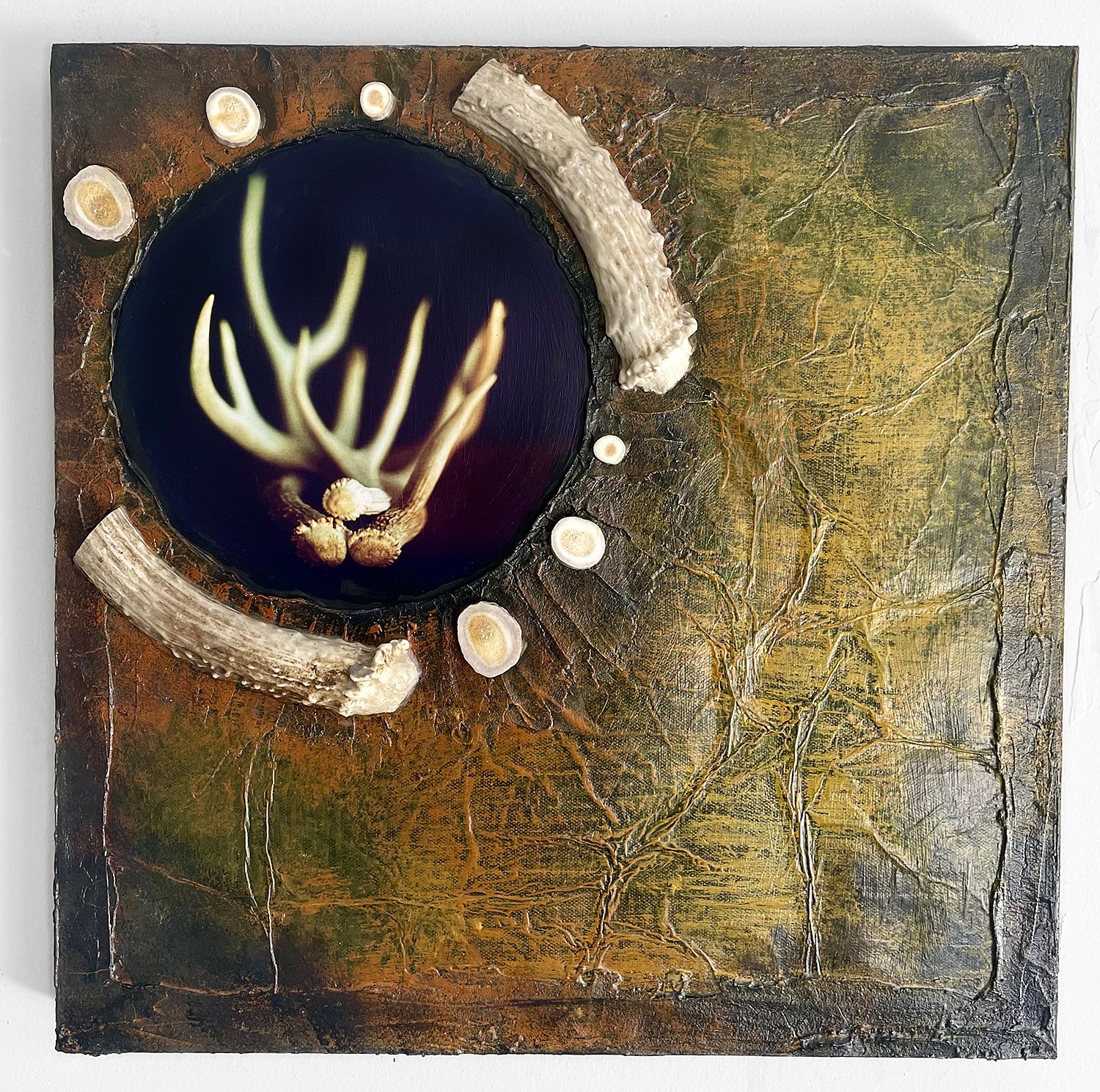
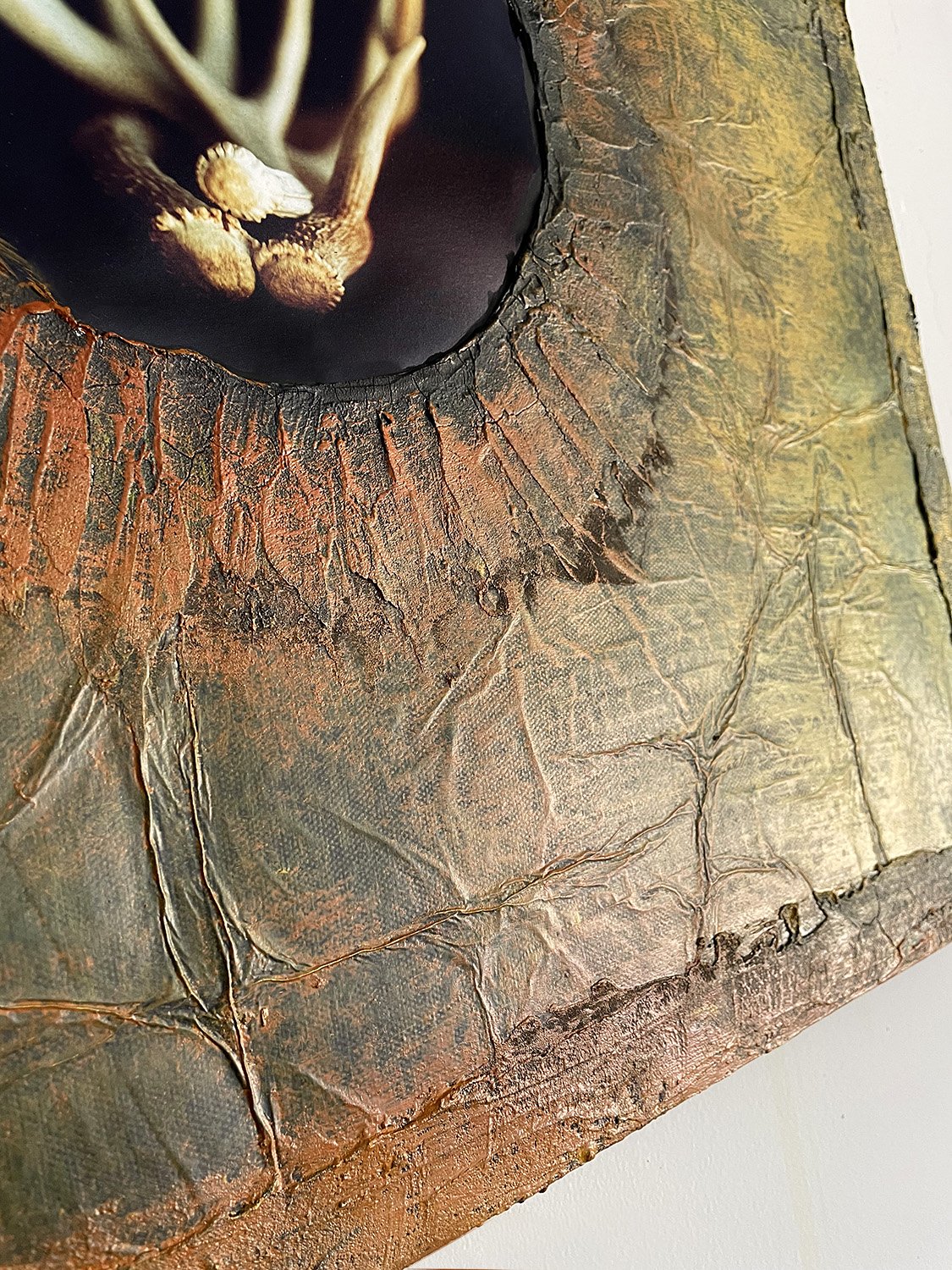
“Rocky Mountain Mule Deer Antlers,” 18” x 18” (45,72 x 45,72cm) Mixed Media: Photography, Painting, and Sculpting, August 20, 2023

Something New: Mixed Media; Photography, Painting, and Sculpting

Quinn Jacobson November 3, 2023

A while ago, I decided I needed to take this work to the next level. I needed to address questions surrounding something “missing” in the work. I wrote an essay a few weeks ago about searching for words like “tactile” and “tangible,” as well as enhancing color—all in the service of decay and impermanence. I wanted to engage the work in an interdisciplinary way—deeper and more involved than simply looking at a photograph. I want to create something that asks to be touched and experienced beyond photography. My goal is to transcend photography and create a “living” piece of art that represents this land, the people that were here, and the theories I’m addressing surrounding all of it.

Colors and Textures: I’ve mimicked the colors of fall as well as the colors found in the antlers. The surface of the canvas is a reminder (in the shapes) of the antlers as well as roots or veins reaching into the earth. The colors and textures in this piece worked very well together. It is tactile, physical, and contains real objects from the land. The antlers on the canvas are the antlers (some of them) in the photograph. It’s also a reference to the Ute’s skillful tanning of buckskin (deer hides). They were known for the quality and beauty of the leather they made.

Canvas Choice (18” x 18" - 45,75 x 45,75cm): It’s simple; the canvas represents the shape of the state of Colorado. I did the same thing when I made the Ghost Dance work: 6” x 6” wet collodion negatives and prints. I just carried that concept over to this project.

Fibonacci Sequences: Living on this mountain for the past three years, I’ve become closer to nature. I go to bed when the sun sets, and I get up when it rises. I’m aware of the seasons like never before. I see plants and animals in all stages of their lives. The flow and balance of nature are both awe-inspiring and beautiful. I’m beyond grateful to have experienced this. I’ve spent a lot of time photographing flora. I can see the patterns and the consistency in them. I studied the Fibonacci sequence and became very interested in it. I’ve posted about it before. I’ve designed these mixed media pieces based on the Goldaen Ratio and Fibonacci sequences. This is the only time I’m going to point out the details in a piece. The photograph has 10 antler tips and 3 bases—that’s 13. The antlers and antler buttons surrounding the image represent the number 8. The layout is on the Golden Ratio grid. You get it.

Symbolism of Circles: The Tabeguache Ute always set up a medicine wheel, or the circle of life, at each camp when they traveled in the spring and fall. For them, it represents the continuous pattern of life and death, the paths of the sun and moon, as well as the shape of the earth and moon, among many other things. I’ve used the idea of circles as a way to recognize that and to give a sense of peering into something eternal yet impermanent—a visual paradox. The Circle of Life is a central theme of Ute life. The Ute people have a unique relationship with the land, plants, and all things living. The Circle of Life represents the unique relationship in its shape, colors, and reference to the number four, which represents ideas and qualities for the existence of life.

I found this in a presentation to Colorado 4th graders. The People of the early Ute Tribes lived a life in harmony with nature, each other, and all of life. The Circle of Life symbolizes all aspects of life. The Circle represents the Cycle of Life from birth to death for people, animals, all creatures, and plants. The early Tabegucahe Utes understood this cycle. They saw its reflection in all things. This brought them great wisdom and comfort. The Eagle is the spiritual guide of the People and of all things. Traditionally, the Eagle appears in the middle of the Circle.

The Circle is divided into four sections. In the Circle of Life, each section represents a season: spring is red, summer is yellow, fall is white, and winter is black. The Circle of Life joins together the seasonal cycles and the life cycles. Spring represents Infancy, a time of birth and newness—the time of “Spring Moon, Bear Goes Out.” Summer is Youth. This is a time of curiosity, dancing, and singing. Fall represents Adulthood, the time of manhood and womanhood. This is the time of harvesting and of change: “When Trees Turn Yellow” and “Falling Leaf Time.” Winter begins with gaining wisdom and knowledge about “Cold Weather Here.” Winter represents old age, a time to prepare for passing into the spirit world.

The Circle also symbolizes the annual journey of the People. On this journey, the People moved from their winter camp to the mountains in the spring. They followed trails known to each family group for generations. The People journeyed to each family group for generations. The People journeyed as the animals did. Following the snowmelt, they traveled up to their summer camps. In the fall, as the weather changed, the People began their journey back to their winter camps. Once again, they followed the animal migrations into lower elevations. They camped near streams, rivers, springs, and lakes. These regions provided winter shelter and warmth.

The early People carried with them an intricate knowledge of nature. They understood how to receive the rich and abundant gifts that the Earth, Sky, and Spirit provided. They also understood how to sustain these gifts. They took only what was needed. The People used the plants, animals, and earth wisely. They gave gifts in return. This knowledge was the People’s wealth.

The Circle of Life is the rich cultural and spiritual heritage of the Tabegucahe Ute. This heritage is still alive in the life cycle and seasonal cycles of today. It still is alive within the harmony of nature. It is reflected in the acknowledgement and practice of honoring and respecting all things, people, and relationships. The Circle design can be found on the back of traditionally made hand drums. These drums are important ceremonial instruments for the People today.

The idea of impermanence and decay plays a big role in my approach to this work. I've tried to develop a deeper appreciation of impermanence, specifically of my own impermanence. It’s important for me to try to make the viewer aware of their mortality through these pieces and the theories they’re based on. Everything I’ve made images of is either dead or changing in some way (entropy). The way I’m building these pieces up—the textures and colors—refers to the idea of both death and decay (impermanence) and life and living. An elevated sense of gratitude for every fleeting moment of life is very important to have. It fosters a significant recognition of the invaluable essence of human existence by observing the natural endings in everyday life, like leaves falling from trees or the decay of organic matter. This helps people connect with the concepts of impermanence and death on a smaller scale. That’s the big connection between my work and these theories.

I find myself contemplating compassion more while doing this work. Thinking about my own struggles with difference. I suppose the wonderful thing about learning about these theories (death anxiety and terror management theory) is that you have a lot of time to think about, or even meditate about, your own death and the deaths of loved ones. In turn, that allows you to come to terms, in some ways, with all of it. Moreover, I’ve found I have a heightened zest for life. A greater appreciation for the cycle of life, or, as the Tabeguache Ute would call it, the Circle of Life.

Currently working on monotypes: I’ve been working with acrylic paint and doing monotypes. I really like them; they have a lot of potential for this project. As time goes on, I’ll post some occasionally. I just wanted to share this mixed media idea I had and my thinking around it.

In Art & Theory, Mixed Media, Terror Management Theory, Tava Kaavi, Tabeguache-Ute, Sun Mountain, Shadow of Sun Mountain, RA-4 Reversal Positive, Quinn's New Book 2024, Psychology, Project Work, Interdisciplinary Tags In the Shadow of Sun Mountain, Mixed Media, painting, sculpting, photography, canvas, interdisciplinary
Comment
← NewerOlder →

Search Posts

Archive Block
This is example content. Double-click here and select a page to create an index of your own content. Learn more
Post Archive
  • Photography
 

Featured Posts

Featured
Jan 4, 2026
Immortality Projects and Creative Works
Jan 4, 2026
Jan 4, 2026
Dec 29, 2025
Interview With Dr. R. Michael Fisher: Careers of Folly and Wisdom
Dec 29, 2025
Dec 29, 2025
Dec 27, 2025
Denial: Self-Deception, False Beliefs, and the Origins of the Human Mind
Dec 27, 2025
Dec 27, 2025
Dec 26, 2025
The Fragile Self Behind Big Achievements
Dec 26, 2025
Dec 26, 2025
Dec 21, 2025
Living With The Dimmer Switch
Dec 21, 2025
Dec 21, 2025
Dec 15, 2025
A Reading: Introduction In the Shadow of Sun Mountain
Dec 15, 2025
Dec 15, 2025
Dec 10, 2025
Where My Work Is Heading
Dec 10, 2025
Dec 10, 2025
Nov 30, 2025
Notes From the Studio: Staring at the Sun
Nov 30, 2025
Nov 30, 2025
Nov 20, 2025
A Salt Print From Another Life
Nov 20, 2025
Nov 20, 2025
Nov 20, 2025
A Coyote in the Desert, and What It Taught Me Today
Nov 20, 2025
Nov 20, 2025