
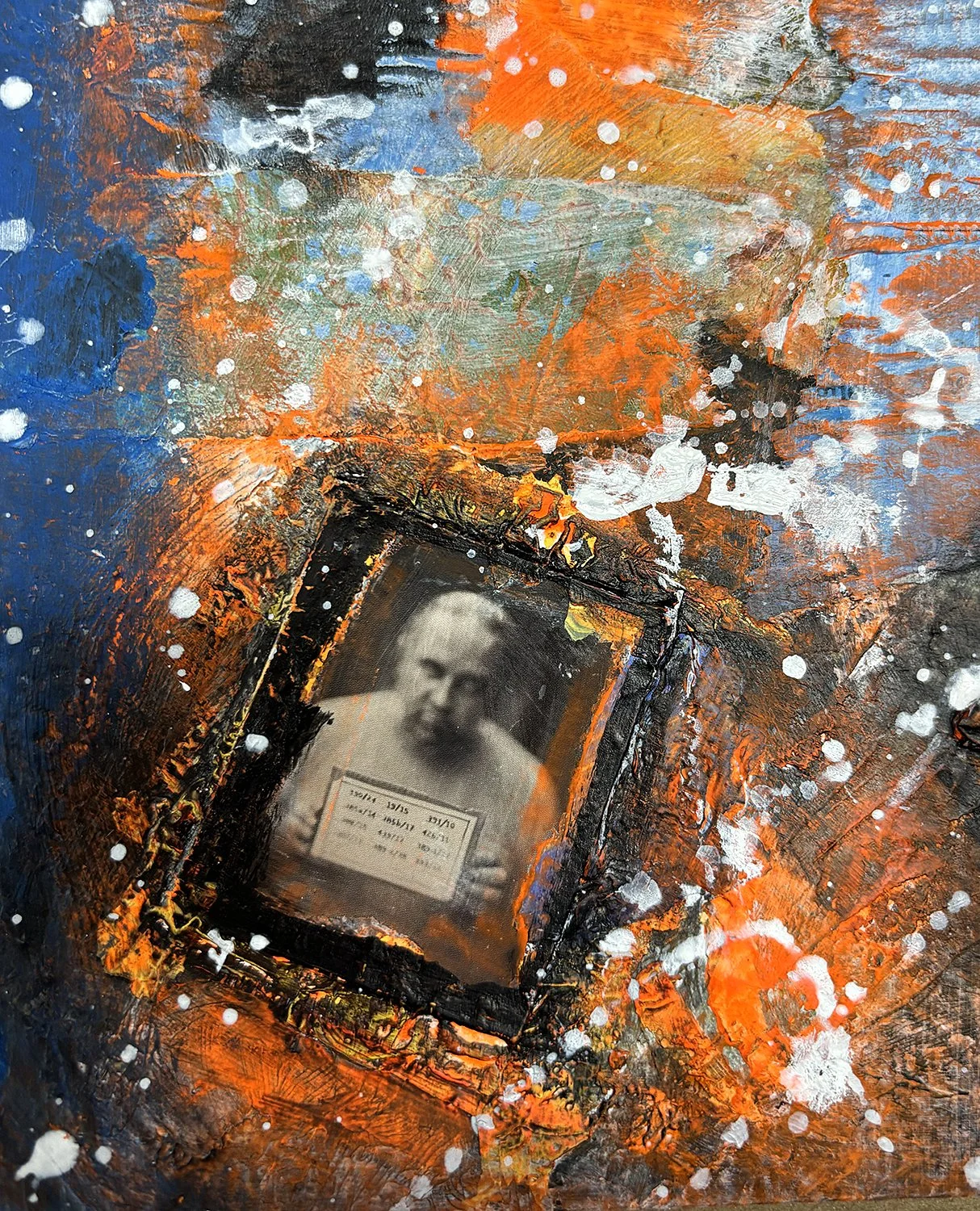
What Mortals Gets Right, and Where Artists Complicate the Picture
One of the quiet strengths of Mortals: How the Fear of Death Shaped Human Society is its refusal to treat death anxiety as an abstract philosophical problem. Rachel and Ross Menzies frame it instead as an organizing force that shapes what we build, preserve, admire, and remember. Culture, in this view, is not ornamental. It is defensive architecture.
Chapter 4, “Immortality Projects and Creative Works,” brings that argument into direct contact with art. Here, the authors situate creative production within a long human effort to leave a durable trace—to announce, across time, I was here (Menzies & Menzies, 2021, pp. 63–64). From prehistoric cave hands to frescoes, literature, monuments, and modern celebrity rituals, artistic acts are presented as symbolic bids against erasure.
This framing aligns closely with Ernest Becker’s claim that humans manage mortality awareness through symbolic immortality projects—systems that promise meaning, continuity, or remembrance beyond the body (Becker, 1973). Art, in Mortals, is one such system. It does not transcend death; it negotiates with it.
What the chapter does particularly well is resist romanticism. The authors emphasize that lasting creative immortality is exceedingly rare. Most works disappear. Most names fade. Even figures like Shakespeare or Khufu are treated ambivalently: their symbolic endurance is extraordinary, but its psychological payoff remains uncertain (Menzies & Menzies, 2021, pp. 84–85). The pursuit of permanence, they suggest, often extracts enormous human cost and may ultimately feel hollow.
Where the chapter becomes especially interesting is in its treatment of failed immortality. Across literature and myth—from Gilgamesh to Frankenstein to modern vampire narratives—immortality is repeatedly portrayed as bleak, corrosive, or monstrous. These stories rarely celebrate eternal life. Instead, they expose its emptiness and moral cost, often emerging from grief or loss rather than triumph (Menzies & Menzies, 2021, pp. 73–84).
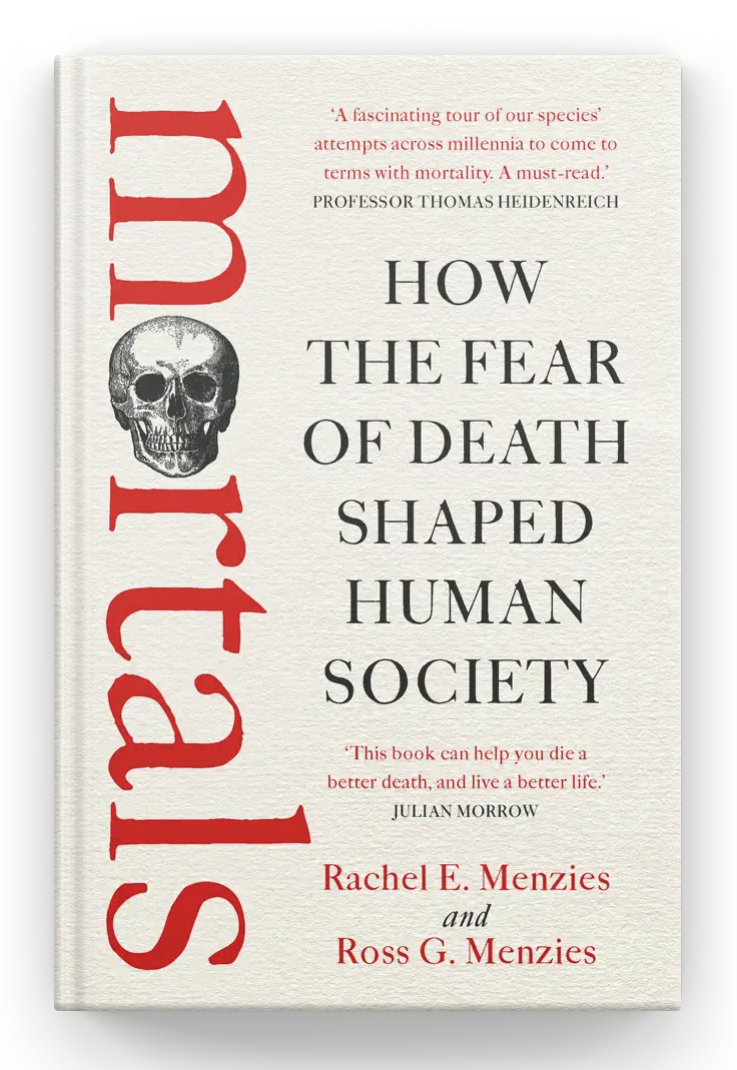
(Text from Amazon)
Human society is shaped by many things, but underlying them all is one fundamental force - our fear of death. This is the ground-breaking theory explored in Mortals.
The ground-breaking book that uncovers how our fear of death is the hidden driver of most of humankind's endeavours.
The human mind can grapple with the future, visualising and calculating solutions to complex problems, giving us tremendous advantages over other species throughout our evolution. However, this capability comes with a curse. By five to ten years of age, all humans know where they are heading: to the grave.
At one point, the authors make a subtle but important shift. They suggest that rather than chasing permanence through monuments or legacy, a “much simpler form of therapy” may lie in exploring death and mortality within creative works themselves (Menzies & Menzies, 2021, p. 84). Art, here, is not a guarantee of immortality. It is a container for mortality awareness.
This is where the chapter opens onto a question it does not fully pursue.
Throughout Chapter 4, artists are treated as vivid examples of a universal human strategy, not as a psychologically distinct group. Creative work is framed as one form of symbolic defense among many. The book does not claim that artists tolerate death anxiety differently, keep mortality awareness closer to consciousness, or rely less on denial. From a Beckerian perspective, this is consistent: everyone participates in hero-systems; artists simply build theirs in visible form.
Yet the material gestures toward something more complex. When creative work repeatedly stages death, critiques immortality fantasies, or dwells inside impermanence rather than fleeing it, the function of art begins to look less like reassurance and more like exposure. Otto Rank suggested that art could function not merely as denial, but as a disciplined confrontation with finitude—a way of shaping terror rather than anesthetizing it (Rank, 1932).
Mortals does not make that distinction explicit. But it leaves space for it.
The open question, then, is not whether art is an immortality project. The chapter makes that case convincingly. The question is whether some forms of creative practice do something slightly different: not promising permanence, but training attention to stay with impermanence without collapsing. If so, artists may not escape death anxiety—but they may metabolize it differently.
That is not a conclusion Mortals draws. It is a pressure the book invites.
References
Becker, E. (1973). The denial of death. Free Press.
Menzies, R. E., & Menzies, R. G. (2021). Mortals: How the fear of death shaped human society. Allen & Unwin.
Rank, O. (1932). Art and artist. Knopf.