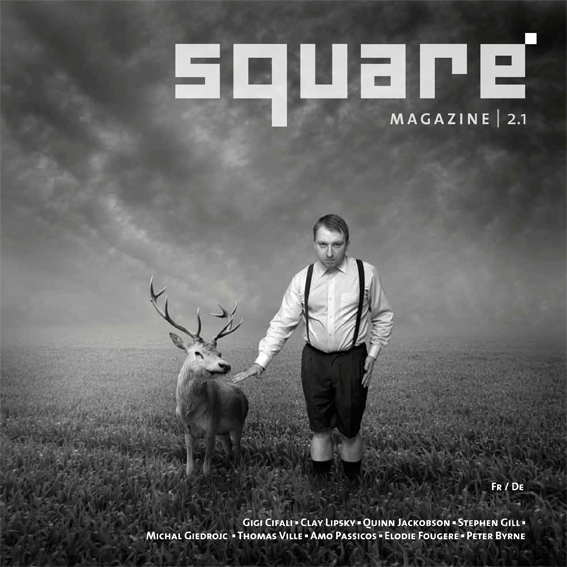
I've been invited to speak and to do a performative lecture at Southern Utah University (SUU). I just received this press release this morning.
If you're in the area, and you can make it, please join us.
I've been invited to speak and to do a performative lecture at Southern Utah University (SUU). I just received this press release this morning.
If you're in the area, and you can make it, please join us.
After almost six years, I'm back in America and teaching Wet Plate Collodion to Americans, again. It feels good.
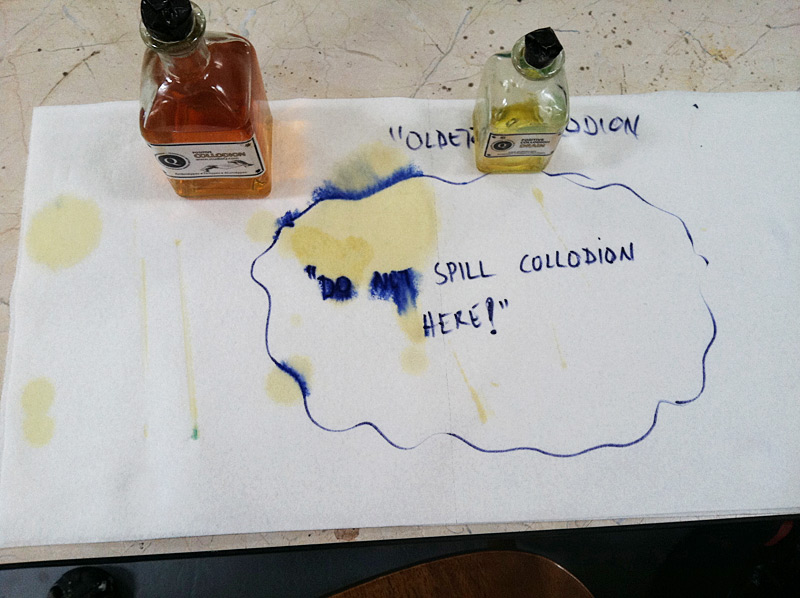
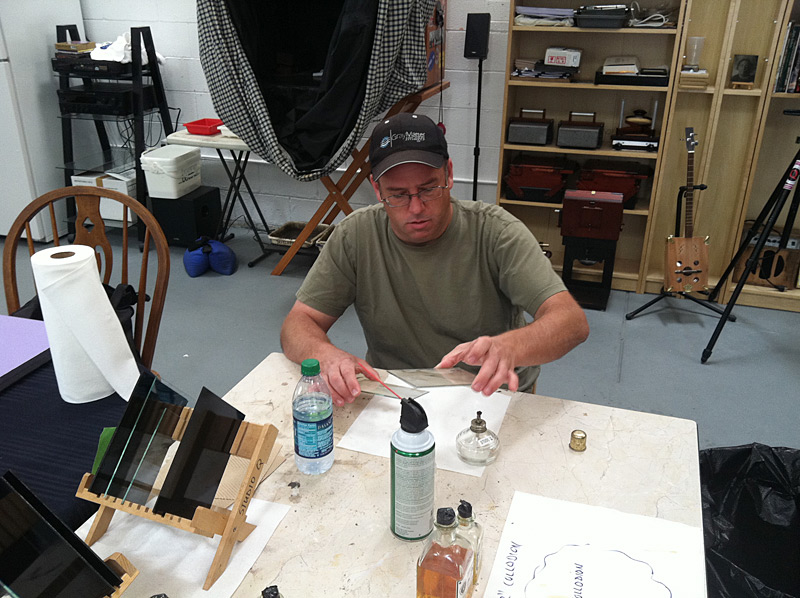
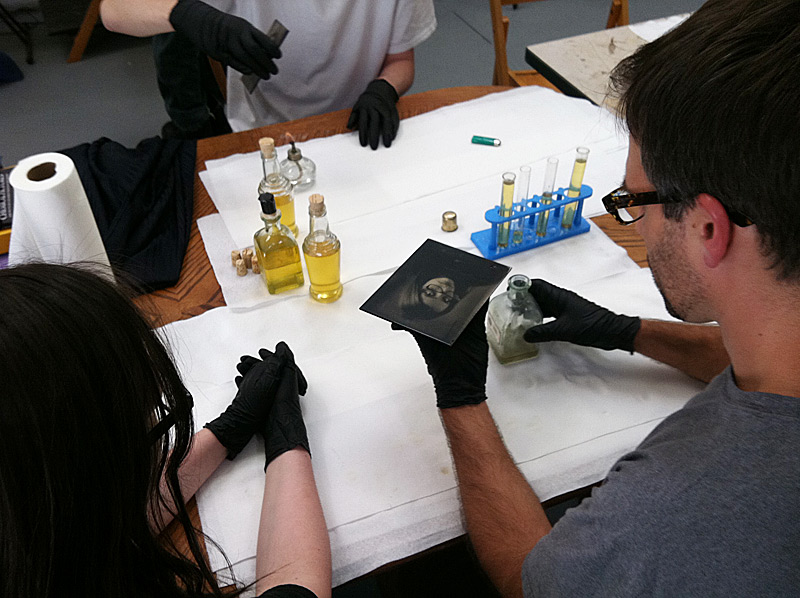
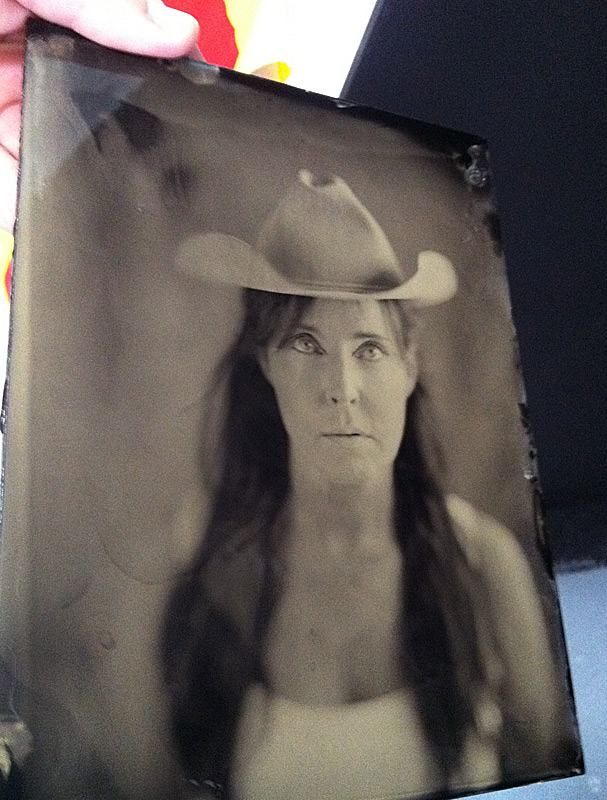
I held the first (of many) Wet Plate Collodion workshop in my studio from September 3 - 6, 2011. It was a great feeling to be back and to speak the language, understand the culture and have people laugh at my jokes. I had some fantastic people in the workshop, too. A big thanks to Chris Kirk, Rob Perisho, Jeff Graves and Izah Gallagher. They're great people with a great Collodion future ahead of them! I hope to see them all again in my studio soon!
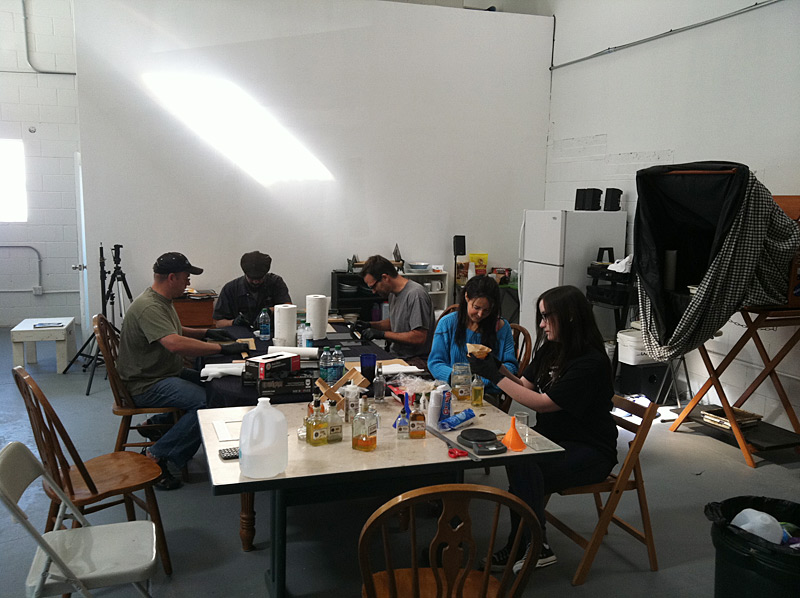
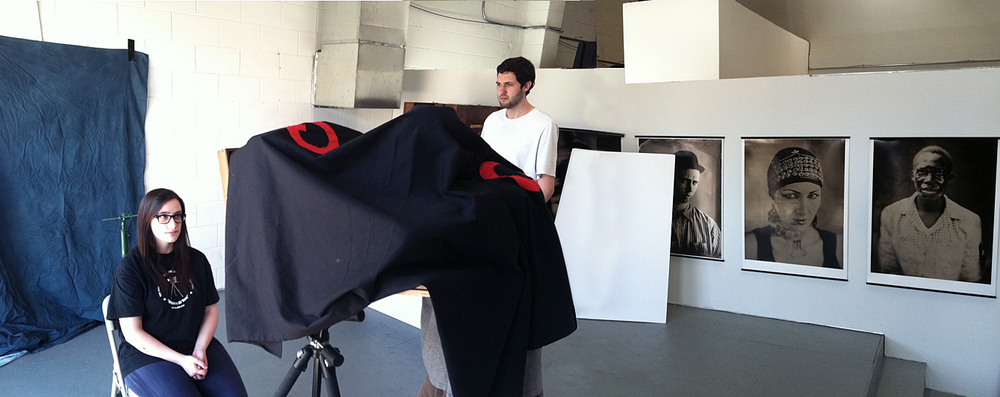
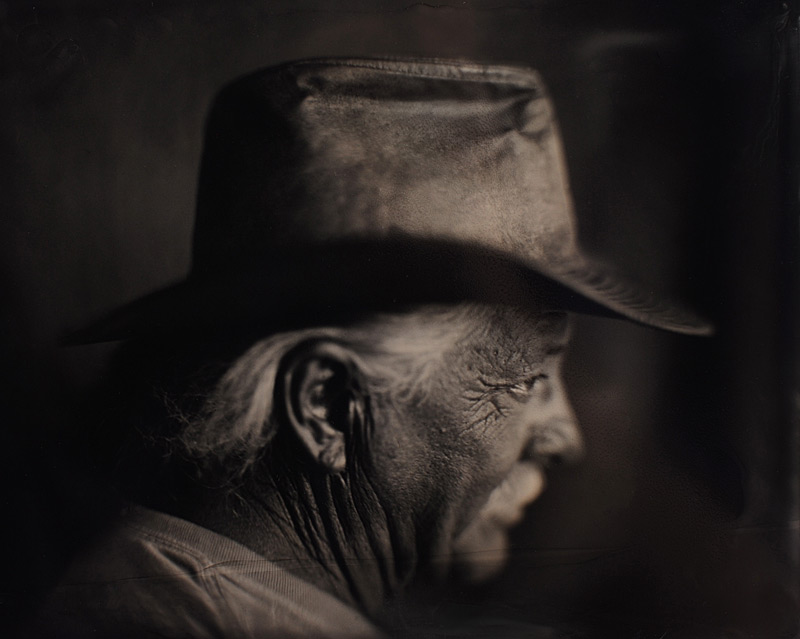
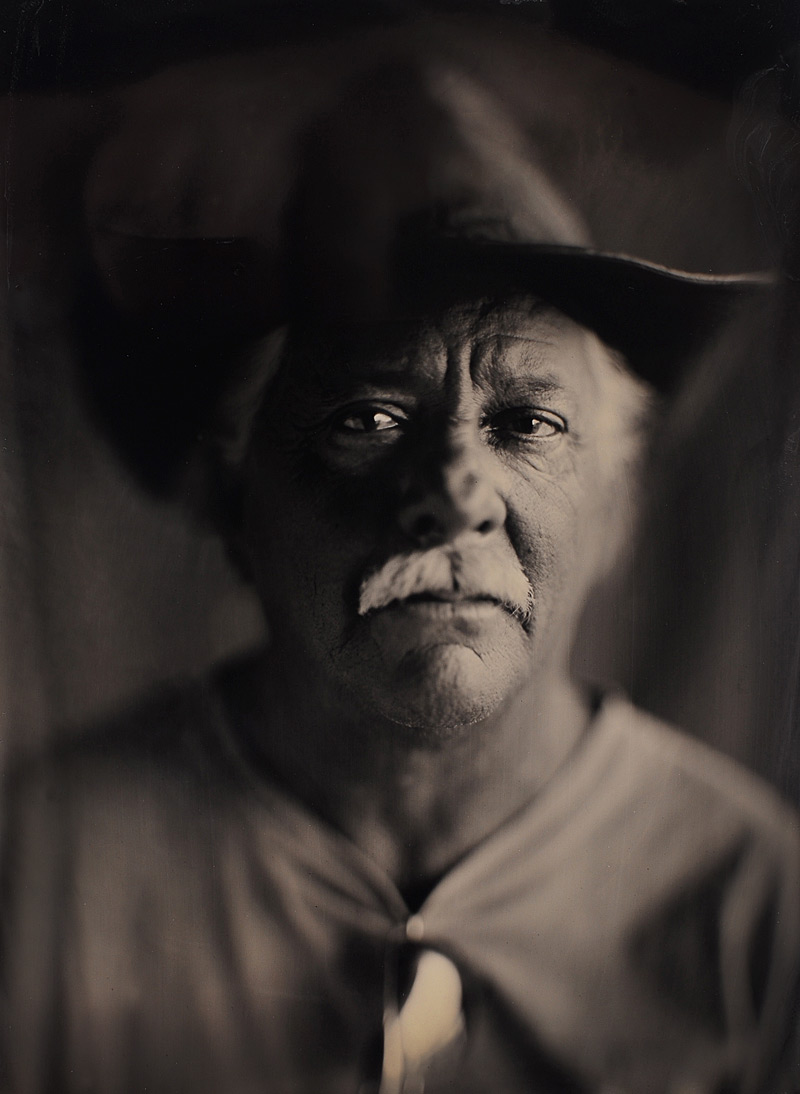
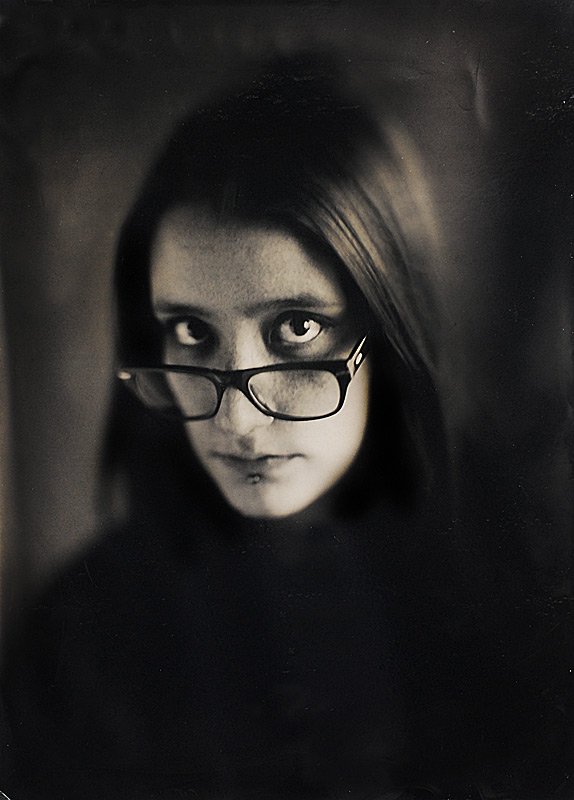
If you're interested in joining me for a workshop/course in a historic photographic process like Daguerreotypy, Calotypy, Wet Plate Collodion, Albumen Printing and/or Salt Printing, keep your eye on this link or send me an email and we'll get you in! I have a nice big (safe) well lighted studio in the RiNo District in Denver, Colorado.
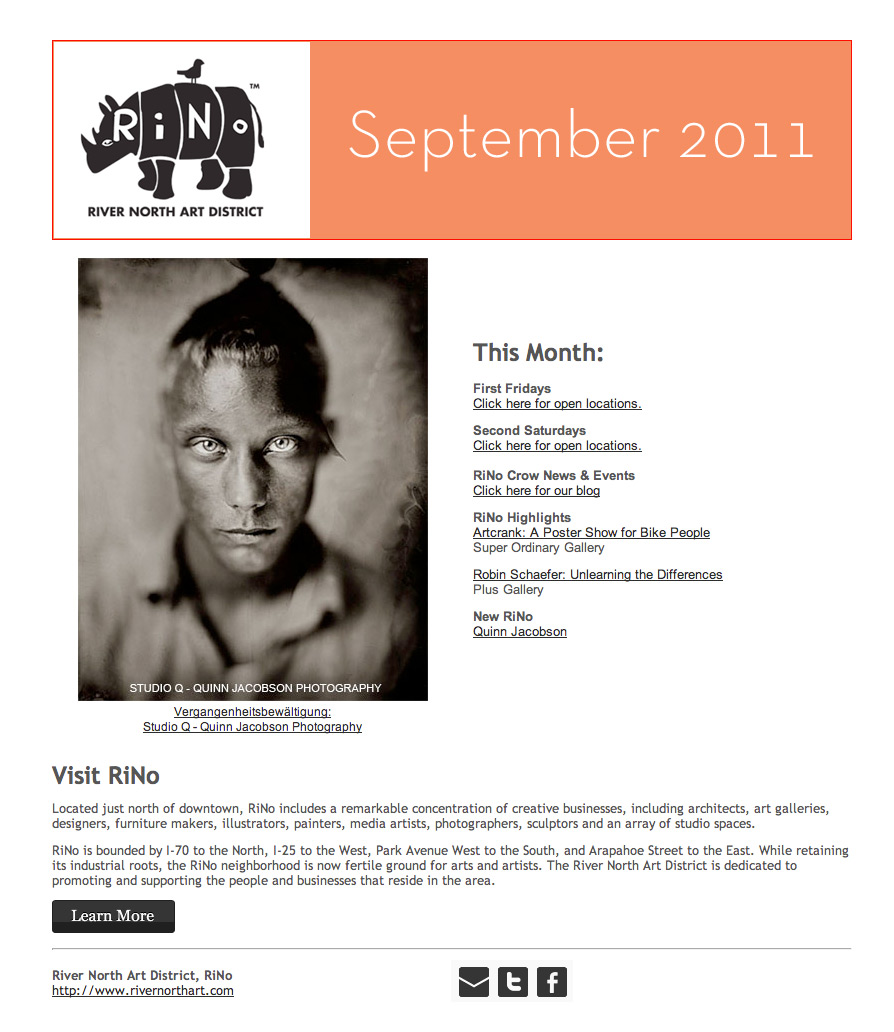
RiNo stands for River North Arts District. That's where my studio is - they made a nice announcement for me in their newsletter for Friday night and my little "open house".
(Limited to 4 Students)
$650
October 8-10, 2011
This course is designed for people who have worked with the positive Wet Plate Collodion process (Ambrotypes, Tintypes, etc.). Darkroom experience is preferred and students should have a good understanding of traditional silver gelatin negative making. Large format camera experience is preferred, too.
Demonstrations
Students will get to see the negative making and redevelopment/intensification process executed from start-to-finish and the workflow methodology that Quinn uses for his work. He will also demonstrate making a Salt Print and/or Albumen print from the negative. Also, this course starts on the Second Saturday in Denver, Colorado. Quinn will have the doors open for the public to see what takes place in the studio!
Chemistry
Quinn will do an in-depth segment on chemistry. Chemistry for negatives is different than positives. It’s subtle but affects the quality of the negative. He will also work through the chemistry for redevelopment and intensification; two very different methods for making negatives. Each individual chemical will be discussed and described in detail. Students learn about each chemical’s function and purpose in making and redeveloping/intensifying negatives – this is very important as it relates to troubleshooting. Safety, storage and handling are also major components of this segment. Students will participate in making each of the chemicals for the process.
Plate Making
This workshop will use Half Plate and Whole Plate format sizes. Students will have the opportunity to work in both of these formats. The second day of the workshop is devoted to making negatives which includes preparations, glass cutting, cleaning, etc. pouring plates, sensitizing plates, exposing plates, developing plates, fixing plates and varnishing plates. The third day will cover printing processes.
Negative Redevelopment & Intensification
Quinn will cover both of these techniques and show the difference between them. Students will learn when to use hardcore redevelopment or a simple intensification.
Salt & Albumen Printing
Each student will select their best negative and make a Salt and/or Albumen Print from it. This course will not cover making Salt and Albumen paper, but will provide students the paper and supplies for printing the negatives.
Critiques & Troubleshooting
At the end of the third day, there will be an overview/critique about the images made. This critique is based on troubleshooting – things that went wrong and things that worked. It’s a very valuable part of the course.
What’s Provided?
Course Date: October 8 - 10, 2011
Location: Studio Q / Quinn Jacobson Photography
3519 Brighton Blvd. Unit G Denver, Colorado 80216
Time: 9AM - 6PM (with a lunch break)
Cost: $650
IMPORTANT: This is "first come, first serve". To ensure a place in the workshop, please send $100 deposit to sales@studioQ.com (PayPal) or email quinn@studioQ.com to make other arrangements.
 Studio Q - 3519 Brighton Blvd. Unit G Denver, ColoradoWell, it's almost August and I left Europe on the 4th of June. To say I've been busy is an understatement.
I'm just now starting to see tiny glimmers of my life coming back. I regret nothing, but it's not an easy task moving from continent to continent. It's emotionally, spiritually and financially stressful.
In a few months, when my life resembles what's in my head and in my heart, I will look back and say that I loved every minute of it.
America so far, especially Denver, has been good to me. There is some adjustment and a wee bit of culture shock, but overall, I feel at home. I'm happy to be back - it's where I belong - and it's home.
I'm looking forward to the next couple of months. I'm working hard on getting my studio setup for an open house/gallery stroll on September 2nd and for teaching workshops on September 3rd -4th and 5th - 6th. I'm doing it right this time - it's the studio that will make any artist/photographer drool.
I was invited to do a Wet Plate Collodion Perfomative Lecture at The Royal Academy of Fine Arts in Ghent, Belgium.
Thanks to Willem Vermoere, Saartje Van de Steene and Thomas Weynants the turnout was great. I would guess there were 50 or 60 people in the auditorium.
The space was wonderful. An old lecture area that was used to dissect cadavers in 80 or 90 years ago. The students could sit and watch the professors/doctors slice and cut without obstruction.
I wasn't cutting bodies up, however, I was dissecting the concept of photography and questioning what it is today and why we shoud care about definition and intent.
There were three sections of seating in the lecture hall. It felt like I was praying the whole time. Looking up, scanning the audience and looking toward the heavens. It was cool.
Willem took us on a tour of the facilities. It was impressive. Beautiful spaces, studios and WET darkrooms. Yes, WET darkrooms. God bless you!
I asked what it costs for a student attend - he said about 600 Euros a year! America needs to wake up. I'm from a country that can afford to educate their people, provide medical attention and we do neither without charging exorbitant fees and/or creating lifelong debt. It's sad. It seems that the powers that be are out to create classes - keep the people that can't afford education in the dark, ignorant and afraid. And when they get sick, let them die. Again, it's sad.
As an American in Europe, I can see we have a lot to learn about all of this. Call it whatever you want to - education and health care should be available to everyone. I mean everyone!
Ghent is a beautiful city full of very friendly people. I wish we could have stayed longer, but we are winding down now and had to get back to Germany to attend to other obligations.
Thanks to Saartje for the photos! If I can get someone to send me some photos or videos of the plates I made that afternoon, I'll post them.
 Quinn preaching to the crowd. They are actually looking at my slide show.
 The slide show - it was much bigger than it looks - my dark box, lights, etc. all there, too.
 There were three sections of seating - mostly all full - a great crowd. That's Thomas on the right.
 Jeanne cleaning the plates - the best assistant you could ever ask for. We have fun doing these!
 Making the exposure of Erick - this was a very nice plate - 8x8 Black Glass Ambrotype.
Recently, I had the opportunity to present my work and do a Wet Plate Collodion demonstration (I call them performative lectures) at AKV | St. Joost Art School in Breda, The Netherlands.
 Quinn talks about the details of the historic photographic processes. Photo by Philippe Moroux
 Bruno, the sitter, listens as Quinn explains what will happen. Photo by Philippe Moroux
 Bruno's plate ready for the fix. Photo by Philippe Moroux
 Varnishing Bruno's plate. This is a 16cm x 16cm Black Glass Ambrotype. Photo by Philippe Moroux
 Students and guests watch as Quinn shows the process and talks about his work. Photo by Philippe Moroux
 Quinn varnishes a plate of a sitter with tattoos. This is a 16cm x 16cm Black Glass Ambrotype. Photo by Philippe Moroux
  8" x 8" (20cm x 20cm) Black Glass Ambrotype.
"Wait! I thought you were leaving Europe, Quinn?"
I'm trying! There's been confusion about when I'm leaving Europe (because of what I've said/posted). To tell you the truth, I thought I would have been gone by now. I'm not.
The process of leaving is like a roller coaster. One day, everything is in place and the next day it's all changed. It's not quite working as smoothly or as fast as I thought it would, so I'm still here. At least for a little while longer.
It's very complicated to explain, but it has to do with the economy, my own desires and hopes for what I want next and patience. So, for right now, I'm going to resume living and do what I do best. Life's too short to put it on hold.
It seems that I’m constantly returning to this theory that photography/art needs to be seen in context and that the artist needs to have some kind of intent behind the work. In fact, I would argue that the concept is more important than the images themselves (but usually includes the object in some way or the process/ritual). Jehovah Witness - Ogden, Utah 2003
This is purely opinion, and we all know what opinions are like, right? I’ve argued my position about context and intention with a lot of different people. A few people agree with my theory, however, most don’t.
Every artist can relate with the frustration of feeling like a fraud, or a fake. You might feel like the work you do is trite and clichéd – that you’re not working from an authentic place – it’s normal to feel this way occasionally if you’re serious about what you’re doing. However, most aren’t.
Some days, you might even feel like throwing in the towel; quitting and leaving all of the frustration and emotional distress behind. I’ve felt this way on more than one occasion. I try to use it as a barometer for what I’m doing and why I’m doing it. Although it’s not pleasant to go through these experiences, I think it keeps me honest – both to myself and to the viewers of my work – and that’s very important to me.
But what about people that are taking photographs and getting them exhibited, published in books, magazines or even on the web. Most have no context and certainly no intention. They’re simply random photographs made in an antiquated process or with something that’s been discontinued, or is considered “old school”. I don’t want to point to specific people or publications, but you know what I’m talking about, it’s easy to find online. The problem isn’t what’s there; the problem is what’s not there. I know I’m painting with a very broad brush here; there are a few artists that are both inspiring and impressive. However, most aren’t.
Most photographs that fit into this category are acts of randomness, an exercise in complete serendipity, or complete happenstance. Some appear as complete technical exercises, nothing more; nothing serious – nothing that the artist is actually contributing can be seen – there’s nothing wrong with that, per se. However, when it becomes a large group of photos that make no sense, or are simply copies of other people’s work, it’s a big problem. At least it is for me.
Last year, when I was in Paris, I was asked if I was worried about teaching the Wet Plate Collodion process to people and having them copy my work and my style. At the time, it struck me as an odd question, but it did resonate with me. Over the years, I see more and more images that are made in a very similar style of mine, but without any context or intention. For many years, I’ve tried to define my style and articulate my preoccupation with “the other” through photography (a very difficult thing to do). I have a long history with marginalized societies (I’m part of several), I’ve explored the questions surrounding this topic and made photographs that speak to my passion. It’s not random, it’s not a “kick” that I’m on, and it surely isn’t because the images “look cool”. It’s serious work to me and to a lot of viewers that take the time to understand the context and intention supporting it.
The only thing I would ask other artist/photographers to do is to consider context and intention in their work. Can you defend your work? Can you answer the tough questions? I try to think about my work as much as making the work. Don’t ask the viewer to figure out what you’re trying to say, that’s your job. And if you don’t know what you’re trying to say, maybe you should consider spending some time to try and find out.