
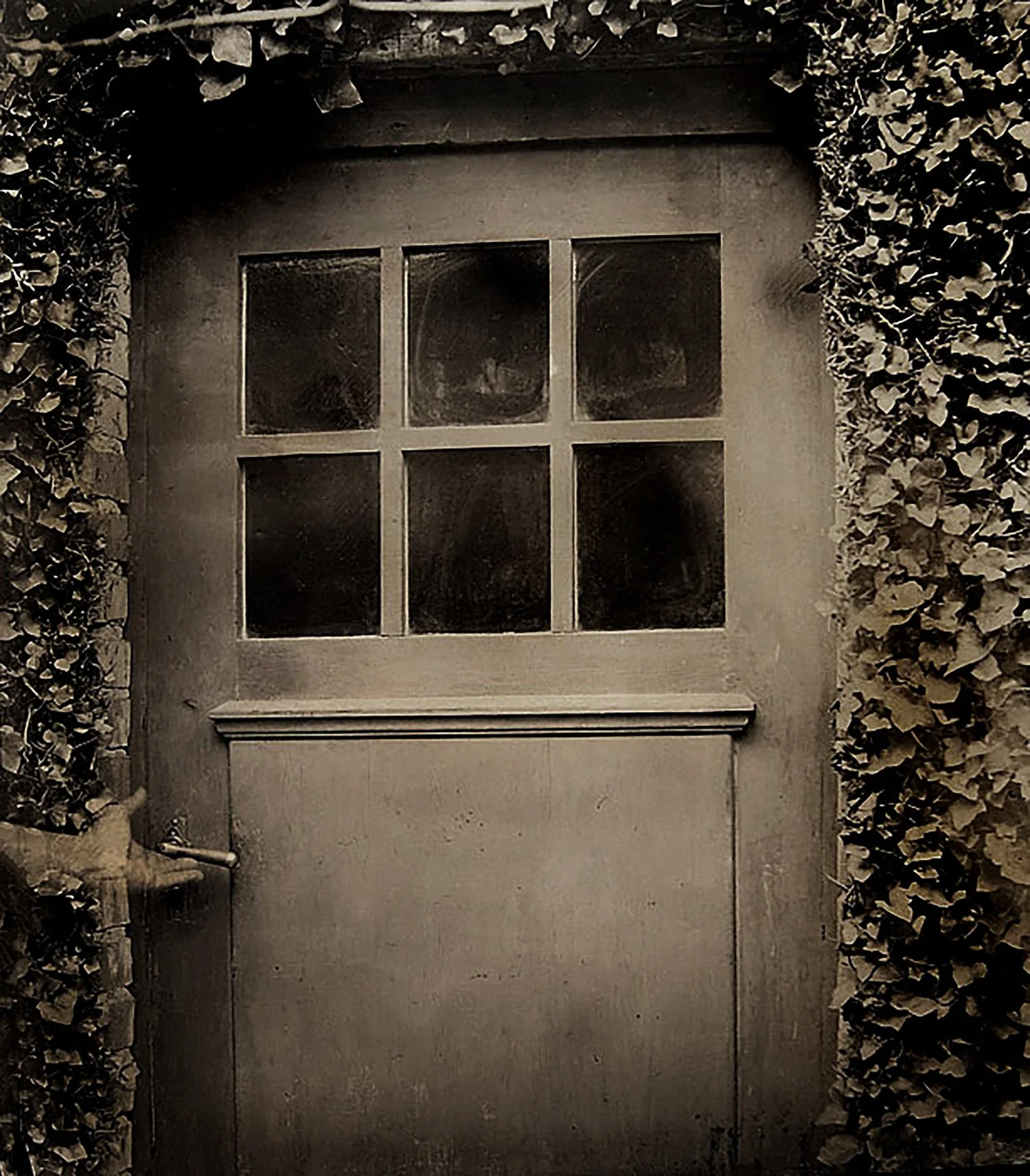
The Pressure of Knowing: Otto Rank and the Psychology of the Artist
Why do artists often seem to live at the edges of cultural meaning? What compels someone to question the beliefs and assumptions that provide other people with stability? And why does creative work so often emerge from anxiety, uncertainty, and psychological conflict?
In this week's reading of Glass Bones: Art, Mortality, and the Human Mind, I explore these questions through the work of Austrian psychoanalyst Otto Rank and his understanding of the creative personality.
Rank was one of the earliest psychological thinkers to take the artist seriously as a distinct expression of the human condition. He recognized a fundamental tension in the creative life: the desire to belong to the collective world of culture and the equally powerful need to maintain one's individuality.
We all depend on culture to provide meaning, identity, and continuity. Our religious beliefs, social institutions, traditions, and shared narratives help us navigate a world in which our existence is temporary. These systems provide psychological stability, particularly when we're confronted with uncertainty and death.
For Rank, the artist occupies a difficult position within this arrangement.
Artists need culture. We depend on its symbols, language, history, and traditions to communicate. At the same time, creative work often requires enough distance from those structures to question them, challenge their assumptions, and recognize their limitations.
Too much belonging can diminish the independence necessary for creative inquiry. Too much separation can make communication nearly impossible.
The artist lives somewhere between those conditions.
The Artist and the Neurotic
One of Rank's more provocative ideas concerns the relationship between the artist and the neurotic.
He believed both experience heightened psychological tension. Both struggle with the conflict between individuality and collective expectations. The distinction, in Rank's framework, lies in what happens to that tension.
The artist gives it form.
Anxiety, conflict, and uncertainty become material for creative work. Experiences that might otherwise remain psychologically overwhelming can be externalized through painting, photography, writing, music, or other forms of expression.
This is an important insight, particularly when considered alongside Ernest Becker's theories about mortality awareness and our dependence on symbolic meaning.
But I think Rank's interpretation requires some qualification.
My Perspective: The Practice Changes the Relationship
Rank sometimes described artists as possessing a heightened or superior perception of reality.
I'm not convinced that's the most useful way to understand the creative mind.
I don't necessarily believe artists see more than other people, possess greater sensitivity, or have some privileged access to existential truth.
What interests me is the possibility that creative practice requires a different relationship with the things our psychological defenses ordinarily keep at a distance.
Artists often work directly with ambiguity, instability, vulnerability, and impermanence. We return to these conditions repeatedly because they become the material of our work.
That distinction matters.
It shifts the conversation away from the idea of an exceptional artistic personality and toward the psychological consequences of sustained creative engagement.
After decades of working with nineteenth-century photographic processes, painting, and mixed media, I've become increasingly interested in how the act of making something changes our relationship with uncertainty.
The work doesn't necessarily resolve the anxiety. Sometimes it makes the anxiety more visible.
A photograph can preserve a trace of something already disappearing. A painting can emerge from an experience we haven't fully understood. Creative work can hold contradictions that ordinary explanations struggle to accommodate.
Maybe this is one way artists metabolize existential pressure. We give form to experiences that resist easy resolution.
The Cost of Awareness
Rank understood that the artist's position comes at a psychological cost.
Remaining close to uncertainty can make life more difficult. Questioning collective assumptions can produce isolation. The need for individuality may conflict with our equally human need for acceptance and belonging.
There's a certain loneliness in recognizing that the stories we depend on are constructions, even when those stories remain meaningful and necessary.
This is particularly relevant to my larger inquiry into mortality awareness.
If culture provides psychological protection against the knowledge of death, what happens when creative practice continually exposes the limitations of that protection?
Can art become a way of living with the anxiety rather than immediately defending against it?
I think Rank offers an important starting point.
His understanding of the artist as someone caught between individuality and collective belonging helps explain why creativity can be both psychologically demanding and deeply meaningful.
My interest is in what happens within that tension.
The artist may become a witness to the instability of meaning, working with the very uncertainties that cultural systems are designed to contain.
And perhaps the work makes that exposure bearable.
In this chapter, I'm exploring the possibility that creativity offers a way to remain engaged with existential uncertainty long enough for something meaningful to emerge.
The pressure of knowing remains.
We continue making things anyway.